
The Technology of a Forgotten Industry in Imperial Russia
James Urry
Many Mennonites who moved to imperial Russia from Prussia starting in 1789 were identified as weavers, mostly of linen, and they brought with them spinning wheels and looms.1 Linen was prepared from flax and woven along with wool into cloth, but migration accounts make no mention of silk. The tsarist administrator of foreign colonists, Samuel Contenius, promoted the establishment of a silk industry through planting mulberry trees, the food source of the silkworm. Reports from Chortitza mention silk production beginning in 1807, and between 1813 and 1819 mulberry planting doubled.2 In Molotschna after 1804, early attempts to establish a silk industry by mulberry planting failed, but the trees became part of the afforestation program on the open steppe. Later, in 1828, the reformer Johann Cornies told Contenius that he planned “to promote sericulture,” and he began to gather books and journals on the subject.3 During the nineteenth century numerous publications concerning mulberry cultivation and founding silk industries were published in German and other languages. In 1831, the administrator of foreign colonists instructed Mennonites in Chortitza and Molotschna to form local societies “for the Advancement and Dissemination of Forest Trees, Orchards, Sericulture, and Viticulture.” The instructions included a requirement to establish a library of German sources on agriculture and to acquire a silk reeling machine.4
Most accounts identify Altonau as the first Molotschna village to cultivate mulberries principally for sericulture, and by 1835–36 it became a centre of the silk reeling industry. The development of the industry intensified with the formation of the Ministry of State Domains in 1837, when the government provided scientific advice on sericulture and mulberry plantations expanded rapidly. By 1840 over 64,400 acres of Chortitza were planted with 13,000 mulberry trees; thirty-six families were raising silkworms and ten were reeling silk; by 1851 this had increased to almost 407,000 acres, 260,000 trees, and over a thousand families raising silkworms and 340 reeling silk. In Molotschna sericulture expanded even faster.5 By 1842, 60,000 mulberry trees were planted and seventy-one families bred silkworms; by 1847 over 300,000 trees were planted and over five hundred families raised silkworms; by 1850, almost nine hundred families raised silkworms.6
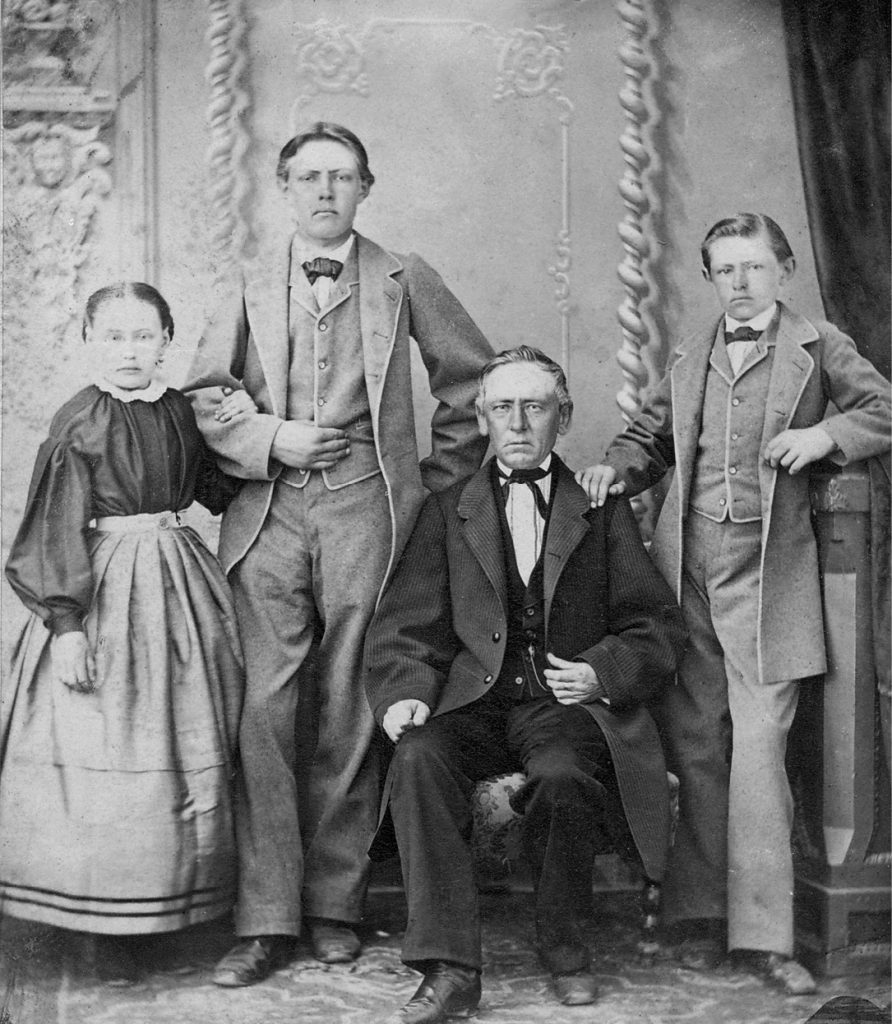
In 1846 the Moscow Agricultural Society, founded in 1819 and connected with the Ministry of Agriculture, established a Sericulture Committee, and Cornies’s son-in-law, Philipp Wiebe, became an active member.7 Government experts were sent to study Mennonite involvement in the industry and foreign visitors praised the Mennonites’ activity.8
The Tsarist State and Silk Machines
In the early 1840s, in order to obtain better supplies of silk yarn for textile factories mostly situated around Moscow, government departments investigated new methods of reeling at home and abroad. This sudden interest in silk machines was noted in France.9 A French reeler was purchased from silk expert Stéphane Robinet and sent to Moscow where it was examined and “improved” by the Sericulture Committee’s engineer, Paul Krippner.10 A machine invented by a German silk factory owner in St. Petersburg, Heinrich Graf, was also investigated. Graf came from Mühlhausen, a town on the Rhine with an established silk industry, and his machine reduced the stages needed to produce silk yarn by combining and twisting the thread. Previously this had involved two processes. Graf’s machine also improved the quality and strength of the yarn. His machine was examined by members of the Imperial Academy of Sciences in St. Petersburg and their positive opinion was later confirmed by French experts.11 Graf’s machine, however, was large and complicated; he also had copyrighted his invention in imperial Russia and France, which increased its potential cost.
In 1848, the Sericulture Committee purchased a newly invented reeling machine from Paris designed by a Venetian, Luigi Locatelli.12 Locatelli’s machine attracted the attention of the committee because its small size meant it was easy to transport and could be converted into a more complicated reeling machine.13 It was tested and examined by Krippner, who constructed a copy that further simplified its movement. The choice of the machine and its modification reflected the desire of the Ministry of State Domains to develop the silk industry among state peasants and military settlers. This required a small, simple machine that could be easily used by peasants in their homes, as many foreign machines were considered to be too large, complex, and costly. However, a detailed examination of Locatelli’s machine by a French expert criticized its complexity and cost.14 It appeared the tsarist state would have to look to home for a simple machine.
Mennonite Machines
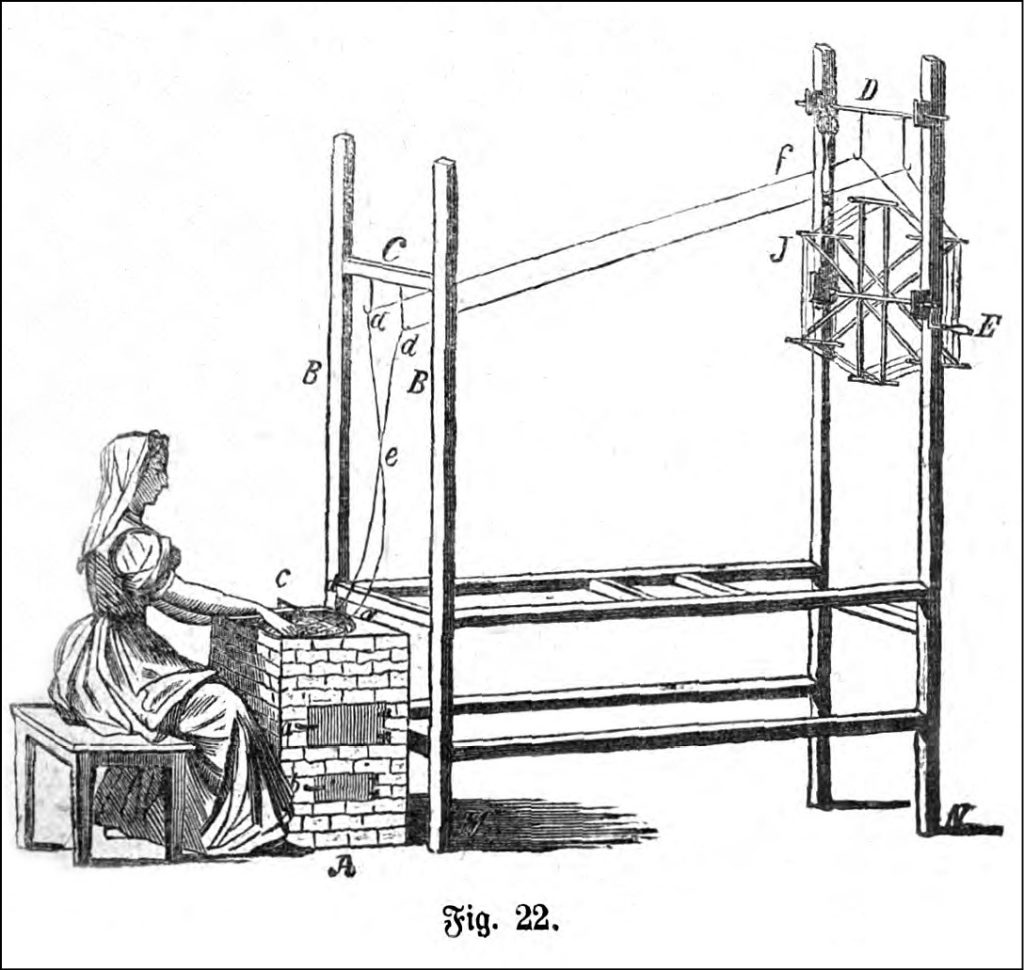
For many years Cornies sold wool and later silk through an agent in Moscow connected with the Sericulture Committee; he secured a copy of their improved Locatelli machine, but it proved unsuitable.15 In August 1838 he informed a tsarist official that he had decided to construct a reeler; by 1841 two reeling machines had been installed, one with Gerhard Enns in Altonau and another with Claas Wiebe in Münsterberg, and in early 1843 Cornies noted there were three machines in the Molotschna district.16 Eager to develop industries in Molotschna, Cornies established a centre for skilled craftspeople in Halbstadt that attracted workers, especially from Prussia.17 Among these was a clockmaker, Abraham Janzen, who relocated to imperial Russia around 1839.18 Later Janzen and at least one other Mennonite, Peter Dyck from Schoeneberg, constructed a silk reeler, possibly after examining Locatelli’s machine and consulting one of the many books on silk and reeling machines published around this time. One such source was by Wilhelm von Türk, a Prussian official and promoter of the silk industry who founded a silk factory near Potsdam.19 Following a visit to Italy in 1827 to investigate its silk industry, von Türk commissioned Ferdinand Queva, a Berlin engineer, to build a large reeler based on the design of Heinrich (Enrico) Mylius, the owner of a silk mill near Milan that von Türk had visited.20 As the Prussian factory lacked a reliable source of power, a smaller and cheaper machine intended for use in peasant households was produced.21 Illustrated in the 1835 and 1843 editions of von Türk’s books, it met, in principle, the needs of the tsarist state.22
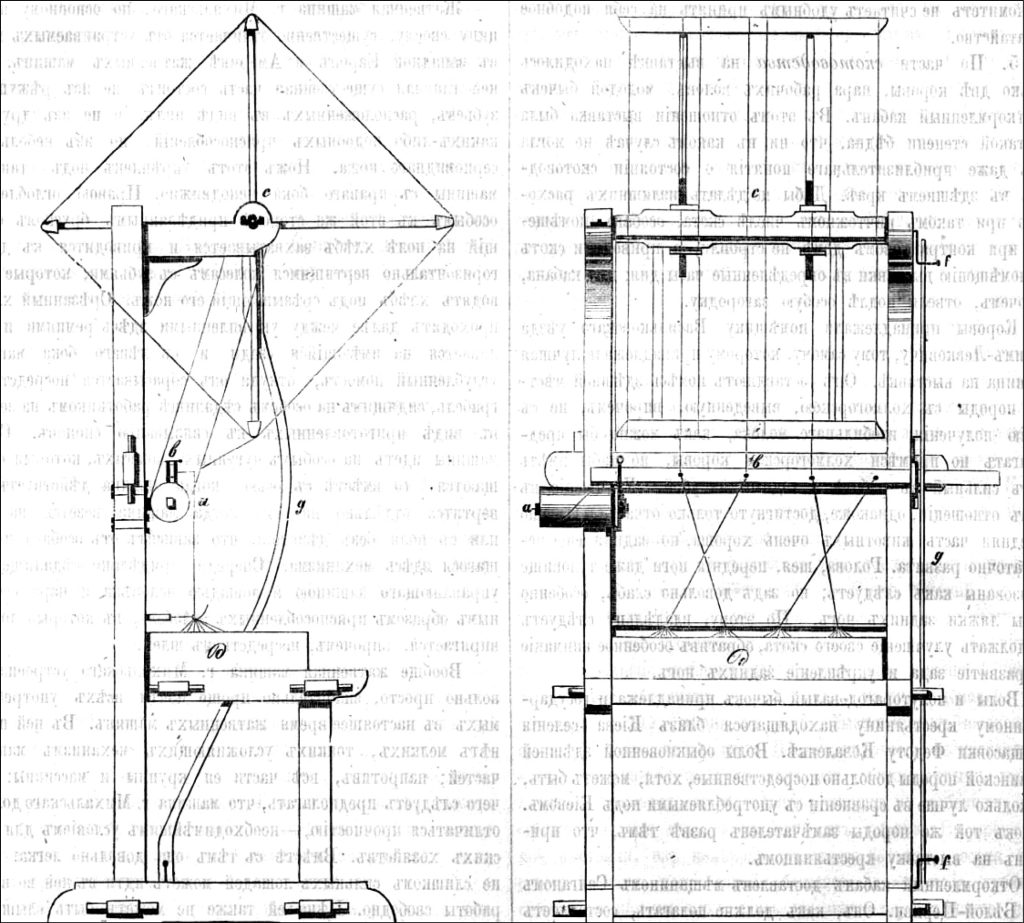
Janzen’s experience constructing clocks equipped him well for the task of designing and making a reeler. A clock mechanism with cogs and wheels calibrated to produce regular, continuous movement could easily be designed to operate a reeler. Although no plans, models, or examples of Janzen’s first machine apparently exist, some idea of what it might have looked like and how it operated can be reconstructed from contemporary sources.23 Like von Türk’s machine, it consisted of an upright, wooden frame with a mechanism set in motion by a foot pedal. The cocoon threads were drawn through a basin of warm water onto a wheel. It likely resembled the illustrations published in a Russian agricultural journal of a reeler that claimed to improve Janzen’s machine by replacing its metal cogs with simple wooden parts.24
Early models pulled two threads from cocoons placed in a warmed basin, but later models could draw threads from eight and even ten cocoons. In 1846, Janzen’s machine was awarded a prize at an agricultural exhibition and a leading silk manufacturer in Moscow purchased two of his machines.25 Other Mennonites also designed reelers, although it is unclear how these machines were regarded and if they were generally manufactured.26
Janzen’s machine initially was designed for peasants, but Mennonites became the principal users. Early models tended to produce damp threads as the basin was too close, so Peter Lepp from the village of Einlage in Chortitza redesigned it for the mechanic Peter Dyck to build.27 Lepp’s remodelled reelers and various improved parts were sold to non-Mennonites; a complete machine could be purchased in Odessa (Odesa) in the later 1850s for 20 rubles.28 Lepp was Janzen’s nephew and had been apprenticed to him in Prussia before Janzen moved to imperial Russia. At Einlage, Lepp constructed a foundry where he could cast metal parts, experimented with dyes, and built a silk reeling factory. According to a later source, Lepp constructed a circular reeler operating a hundred bobbins, and this may have been connected with his silk factory development, as in Italy similar machines operated in silk mills.29 Within a few years, however, Lepp began to manufacture agricultural machines as Mennonites turned to large-scale grain cultivation, particularly wheat intended for export.
Women and Silk Machines
References to silk in Europe overwhelmingly name men as the producers of silk, presumably because they owned the means of production; however, women typically performed most of the labour. As in Western Europe, Mennonite women in imperial Russia did most of the work involved in producing silk, from caring for moth eggs and feeding caterpillars, often with the help of children, to preparing cocoons and particularly the skilled work of reeling.30 They carried ultimate responsibility for the quantity and quality of the final yarn.
Women who immigrated from Prussia brought the skills of spinning wool and preparing flax yarn, while men mostly wove cloth. Such work occurred in households, and in the case of silk, as only yarn and not cloth was produced, this division of labour was not followed. Operating a silk reeler involved greater skill than using either a spindle or a spinning wheel, especially as silk machines became larger and more complex. Spinning was a seasonal activity carried out in winter once sheep had been sheared or flax harvested, but for some the increasing mechanization of silk production meant it became a full-time occupation.
Elsewhere in Europe, the mechanization of the silk industry and its increasing concentration in workplaces outside homes involved changes in gender relations, particularly among young women expert in reeling.31 An 1852 report on Molotschna noted that reeling was “a special activity in which, with few exceptions, only young girls participate.”32 Married women with children had to manage the household, but some still reeled or instructed younger women. The development of the industry and the need to improve the quality of yarn resulted in the work of such women being recognized. In 1852, a widow, Catherine Klassen of Kronsgarten, was recommended for an award for her thirty-six years’ service reeling silk and teaching younger girls her skill.33 Before 1870, Margaret Wall won a prize for reeled silk at a Kharkov (Kharkiv) fair.34
Proto-industrial Developments
In 1843, an article in a German trade journal argued the silk industry needed to be centralized if it were to produce more thread of a better quality, and that this could only be achieved in “special facilities where active, continuous supervision takes place.”35 This reflected a trend in all major European silk manufacturing areas, such as northern Italy, and was actively promoted in the contemporary literature concerned with establishing profitable silk industries.36
Cornies had been made aware of the problem with quality by his agent in Moscow who sold his wool and silk. In 1846, Stéphane Robinet examined a sample of silk thread produced in Tiegenhagen, Molotschna, and concluded it resembled “country silk,” a somewhat coarse silk, spun in households, inferior to the fine silks from silk reeling factories.37
At least as early as 1843, Cornies considered building reeling centres and a cloth factory in Molotschna and communicated with Mennonite silk factory owners in Krefeld, Prussia. A leading tsarist official, however, told him to abandon the idea of a cloth factory and concentrate on sericulture.38 Cornies eventually constructed a building for young girls to be instructed by experts in reeling.39
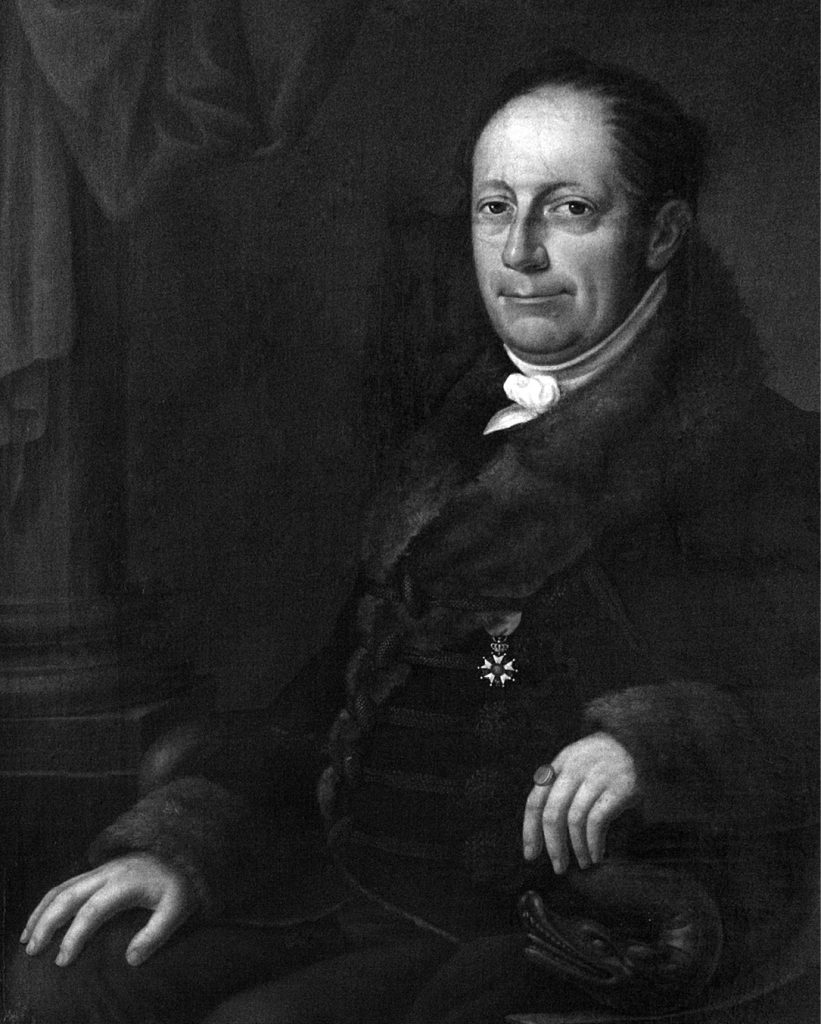
Although some claim that Cornies’s efforts ended with his death, his son-in-law Philipp Wiebe enthusiastically continued his work. In the early 1850s, he established a system that encouraged people in Molotschna to bring cocoons raised in their households to reeling centres where the quality of reeled silk could be monitored. On his Yushanlee estate, Wiebe constructed “a massive building” and installed five of Janzen’s latest, “improved” reeling machines and a Graf reeler.40 Silk reeling was just one proto-industry Wiebe established at Yushanlee; the others included a brick and tile factory and a tobacco processing centre.41
In the factories a more authoritarian system existed, and Franz Klassen, an established silk producer, was appointed as an inspector to oversee production. The rules required the thread to be produced to a “uniform thickness” and quality. Anyone who produced poor quality silk was forbidden “to engage in the business.” As the rules required producers to reel eight or ten cocoons, this would require them to invest in a larger Janzen model that most could not afford.42 For many, reeling yarn was no longer a household occupation engaged seasonally, although some households installed more than one machine and reeling became a full-time occupation.43 Increasingly, however, silk reeling became a proto-industry employing skilled operators and machinery capable of producing quality yarn in order to ensure maximum returns in markets beyond the colony.44 Those listed as the main producers of silk and their locations changed between the 1850s and the end of the 1860s. The list included Jacob Siemens (Elisabeththal), Jakob Neufeld (Halbstadt), Peter Penner (Halbstadt/Grossweide), Johann Bergmann (Tiege), Gerhard Peters (Ladekopp), and Peter Friesen (Rosenort).45
Silk machinery, invented, built, and controlled by Mennonites, changed lives. In Molotschna, poorer households were reduced to tending eggs and caterpillars to the cocoon stage. In 1851 the number of households involved in sericulture and reeling in Molotschna was 1,188; by 1866 it was 547. In Chortitza, with a smaller population than Molotschna and fewer centres, household production continued for longer.46
Troubled Times
Mennonites often exhibited their silk locally and, importantly, internationally.47 At the London International Exhibition of 1862, the textile factory of Clementz, Löh, & Co. from Quellenstein, Russian Livonia, near Riga, exhibited fabric made from yarn reeled in Halbstadt.48 At the Paris Exposition Universelle of 1867, the majority of Mennonite products displayed were silk.
This might indicate the industry was flourishing, but it was not. Despite the construction of factories and Philipp Wiebe’s tireless work to develop the industry in Molotschna, it faced numerous challenges from the mid-1850s onwards.49 The Crimean War, fought close to the Mennonite colonies, disrupted the region’s economy. This was followed by diseases that infected silkworms, with devastating consequences for not just Mennonites but the entire European silk industry.50 Like producers elsewhere, Mennonite breeders turned to obtaining eggs and cocoons from Asia, as the products of two Mennonite Paris exhibitors in 1867 indicate. The opening of Japan in the 1850s resulted in increased trade, and the export of silkworm cocoons as raw silk became a major factor in industrializing the country.51 The Mennonite silk industry was also challenged from within as imperial Russia’s conquest of Central Asia gave manufacturers access to much larger supplies of yarn. The global trade in silk was boosted by the invention of other machines, especially steamships and trains, which ensured the rapid movement of products between Asia, Europe, and North America.52
Conclusion
An 1859 French governmental report on the silk industry in imperial Russia noted that only the Mennonites had established a viable commercial venture, but doubted its financial rewards and whether sufficient labour were available for it to succeed. It suggested Mennonites considered “agriculture much more advantageous” and sericulture a secondary occupation, almost a form of “recreation.”53 Agriculture involved cultivating wheat to feed the increasing populations in industrial, urban Europe. Once again, technological innovations in transport helped expand trade, but in grain not silk.
The production and processing of grain became increasingly mechanized and Mennonites became important manufacturers of agricultural machinery and flour millers. Between 1860 and 1869 the value of agricultural machinery produced in Chortitza increased sixfold, from 6,228 rubles to 38,729 rubles. Much of the financial capital that permitted Peter Lepp to establish his agricultural factories initially came from his involvement with the silk industry. Exactly when Lepp ceased manufacturing reelers and their parts is unclear, but it was reported that he started building agricultural machinery in 1854 with capital of 400 rubles and his returns grew from 10,000 rubles in 1861 to 65,000 rubles by 1872.54 Lepp died in 1871, but his business grew into the major company of Lepp and Wallmann. No doubt some buildings that once housed female reelers were retooled to produce agricultural machines operated by men. In Molotschna, one agricultural machine factory, that of Franz and Schröder in Neu-Halbstadt, was built on the site of a silk reeling establishment.55 The missing connection between the development of Mennonite clock-making and the agricultural machine industry is the silk industry with its reeling machines.
During the 1870s the new steamships and trains used to export grain and transport coal and iron ore also aided the Mennonite immigration to North America. Following its defeat in the Crimean War, the tsarist regime initiated a series of fundamental reforms of society. Whereas previously Mennonites had received considerable government support, official attention now shifted elsewhere. By the early 1870s it became clear that the Mennonites would not be exempted from the major reform involving military conscription. Some, true to their nonresistant principles, sought a new land and carried in their baggage mulberry seeds, hoping to re-establish a silk industry.
James Urry is a retired anthropologist and historian in Wellington, New Zealand.
- Benjamin Heinrich Unruh, Die niederländisch-niederdeutschen Hintergründe der mennonitischen Ostwanderungen im 16., 18. und 19. Jahrhundert (Karlruhe: pub. by author, 1955). ↩︎
- Official government figures in “Statistische Notizen über die Kolonien in Südrussland,” Hertha: Zeitschrift für Erd-, Völker- und Staatenkunde 4, Geographische Zeitung (1825): 27, 30; and George L. von Reiswitz and Friedrich Wadzeck, Glaubensbekenntniss der Mennoniten und Nachricht von ihren Colonien, nebst Lebensbeschreibung Menno Simonis (Berlin: August Rücker, 1824), 382. ↩︎
- Johann Cornies to Samuel Contenius, Oct. 17, 1828, in Transformation on the Southern Ukrainian Steppe: Letters and Papers of Johann Cornies, vol. 1, 1812–1835, trans. Ingrid I. Epp, ed. Harvey L. Dyck, Ingrid I. Epp, and John R. Staples (Toronto: University of Toronto Press, 2015), 160. ↩︎
- Andrei M. Fadeev to Cornies, rec’d July 13, 1831, in Transformation, 1:227–35. ↩︎
- Major silk producers in Molotschna in 1853 included Isaak Enns (Altonau), Peter Rier (Altonau), Jacob Wiens (Altonau), Gerhard Enns (Altonau), and Jakob Neumann (Muensterberg). See S. Maslov, “Obozrenie shelkovodstva u khortitskikh i Molochanskikh kolonistov,” Zhurnal sel’skogo khoziaistva, no. 3 (1853): 255–80. ↩︎
- Figures from various sources, including “O sostoianii raznykh otraslei sel’skogo khoziaistva v iuzhnoi Rossii, v 1849 godu,” Zhurnal ministerstva gosudarstvennykh imushchestv 35, part 2 (1850): 220–22 (hereafter cited as ZhMGI); and Philipp Wiebe, “Ackerbauwirthschaft bei den Mennoniten im südlichen Russland,” Archiv für wissenschaftliche Kunde von Russland 12 (1853): 429–36. ↩︎
- Philipp Wiebe, “Kurze praktische Anweisung zum Seidenbau,” Mittheilungen der Kaiserlichen freien ökonomischen Gesellschaft zu St. Petersburg (1852): 231–33. On Wiebe’s involvement with the committee, see P. M. Preobrazhenskii, Istoricheskii obzor razvitiia shelkovodstva v Moskve i iugozapadnikh ot neia guberniiakh deistvii komiteta shelkovodstva s 1847 goda aprelia 7 i po 7 aprelia 1872 goda (Moscow: Universitetskoi Tip., 1872), https://www.rusbibliophile.ru/Book/Preobrazhenskij_P_M__Istoriche. ↩︎
- S. Maslov, “Obozrenie shelkovodstva u khortitskikh i Molochanskikh kolonistov”; and Alexander Petzholdt, Reise im westlichen und südlichen europäischen Russland im Jahre 1855 (Gera: Griesbach, 1860), 167–68. ↩︎
- Le propagateur de l’industrie de la soie en France 5 (July 1842): 194–95. ↩︎
- Robinet, Mémoire sur la filature de la soie (Paris: Mme Huzard, 1839). On Krippner, see “Deiatel’nost’ Moskovskogo komiteta shelkovodstva,” Trudy imperatorskogo vol’nogo ekonomicheskogo obshchestva 3, no. 6 (1864): 454; his “improved” Robinet is illustrated in V. E. Iversen, Kak dobyvat’ shelk: Nastavlenie k razvedeniiu shelkovidnykh derev’ev i vyvodke shelkovidnykh kokonov (St. Petersburg: Izdanie imperatorskogo ekonomicheskogo obshchestva, 1871), 85. ↩︎
- Bulletin scientifique publié par l’Académie impériale des sciences de St.-Pétersbourg 9, no. 9/10 (1841): 134, 137; Bulletin de la Classe physico-mathématique de l’Académie impériale des sciences de Saint-Pétersbourg 2, no. 19 (1844): 303; 3, no. 4 (1844): 61; and 3, no. 7 (1844): 110. Graf’s machine and meetings in imperial Russia were widely reported in European journals. See, e.g., Leipziger Allgemeine Zeitung, Aug. 13, 1841, 11–12. ↩︎
- See the description under “Nuovo sistema per la filatura della seta, del signor Luigi Locatelli,” Dizionario Enciclopedico Tecnologico-Popolare, comp. Gaetano Brey, vol. 4 (Milan: Giuseppe Chiusi, 1845), “Seta.” ↩︎
- On its advantages, see “Metodo Locatelli per la filatura della seta,” La Dalmazia: Foglio letterario economico 2, no. 4 (1846): 32. ↩︎
- Robinet, “Nouveau perfectionnement à la filature de la soie,” Journal d’agriculture pratique et de jardinage, 2nd ser., 3 (July 1845–June 1846): 394–98. ↩︎
- Robert Haas, Die Deutsche Seidenzucht: Anleitung zum Seidenbau; seine Geschichte, Statistik und Literatur (Leipzig: I. I. Weber, 1852), 31–32; and D. N. Strukov, “Vzgliad na sostoianie raznykh otraslei sel’skogo khoziaistva v iuzhnoi Rossii v poslednie piat’ let (1849–1854),” ZhMGI 56, no. 2 (1855): 1–22, cited in Vladimir Shaidurov, “Russian Germans in Russian Historiography from the Last Third of the 18th to the First Half of the 19th Century,” Mediterranean Journal of Social Sciences 6, no. 6 (Dec. 2015): 155–56. ↩︎
- In Transformation on the Southern Ukrainian Steppe: Letters and Papers of Johann Cornies, vol. 2, 1836–1842, trans. Ingrid I. Epp, ed. Harvey L. Dyck, Ingrid I. Epp, and John R. Staples (Toronto: University of Toronto Press, 2020), 134, 418, 595. Unfortunately, the machine is not identified. ↩︎
- From 1815, Halbstadt already had a wool factory established by Johann Klassen that continued, with mixed success, to produce textiles into the 1850s. ↩︎
- Henry Schapansky, “Letter to the Editors re. Clockmaker Janzen,” Mennonite Historian 34, no. 3 (Sept. 2008): 11. ↩︎
- Cornies may have been aware of von Türk’s writings on the silk industry and those promoting educational reform. ↩︎
- Wilhelm von Türk, Leben und Wirken des Regierungs- und Schulraths Wilhelm von Türk (Potsdam: August Stein, 1859), 115–24. Mylius’s name appears in one account referring to a Mennonite machine: J. H. Sonderegger, “Die Seidenhaspel des Mennoniten Gerhard Dyck,” Unterhaltungsblatt für deutsche Ansiedler im südlichen Russland 5, no. 11 (1850): 83. ↩︎
- Wilhelm von Türk, “Ueber den Seidenbau, mit vorzüglicher Rucksicht auf die Provinz Brandenburg,” Verhandlungen des Vereins zur Beförderung des Gewerbfleisses in Preussen 13, no. (1834): 187. ↩︎
- Wilhelm von Türk, Vollständige Anleitung zur zweckmäßigen Behandlung des Seidenbaues und des Haspelns der Seide sowie zur Erziehung und Behandlung der Maulbeerbäume, nach den neuesten Erfahrungen und Beobachtungen (Leipzig: Gebrüder Reichenbach, 1835/1843). ↩︎
- Ibid.; S. S. Strukov, “O sostoianii sel’skogo khoziaistva v iuzhnoi Rossii v 1851 godu,” ZhMGI 44, no. 2 (1852): 110; Zakharii P. Kniazheskii, “Shelkovodstvo i prepiatstviia, zaderzhivaiushchiia ego rasprostranenie,” Trudy imperatorskogo vol’nogo ekonomicheskogo obshchestva 4 (1857): 48; “Vystavka sel’skikh proizvedenii v Ekaterinoslave v 1858 godu,” ZhMGI 70, no. 1 (1859): 64; and Fedor Chizhov, Pis’ma o Shelkovodstve (Moscow: Tip. A. I. Mamontov, 1870), 179–80, 184–85. ↩︎
- Ivanov, “Usovershenstvovannaia shelkorazmotnaia mashina Iansena,” Zemledel’cheskaia gazeta, no. 17 (1863): 265–66. ↩︎
- “Ob uspekhakh khoziaistva v koloniiakh iuzhnogo kraia Rossii,” ZhMGI 23, no. 2 (1847): 252–62; and “O sostoianii raznykh otraslei sel’skogo khoziaistva v iuzhnoi Rossii, v 1850 godu,” ZhMGI 40, no. 2 (1851): 92–93. ↩︎
- Sonderegger, “Die Seidenhaspel des Mennoniten Gerhard Dyck.” ↩︎
- “Vystavka sel’skikh proizvedenii v Ekaterinoslave v 1858 godu.” Janzen, Lepp, and Dyck were awarded medals at the Exhibition of Rural Products in Ekaterinoslav. ↩︎
- Kniazheskii, “Shelkovodstvo i prepiatstviia, zaderzhivaiushchiia ego rasprostranenie,” 52. Another account stated it cost 25 silver rubles, against 65 for Locatelli’s machine. Chizhov, Pis’ma o Shelkovodstve, 180. ↩︎
- David H. Epp, Sketches from the Pioneer Years of the Industry in the Mennonite Settlements of South Russia, trans. Jacob P. Penner (Leamington, ON: pub. by translator, 1972), 13; and Carlo Poni, La seta in Italia: Una grande industria prima della rivoluzione industriale (Bologna: Il Mulino, 2009). ↩︎
- Claudio Zanier, “La fabrication de la soie: Un domaine réservé aux femme,” Travail, genre et sociétés 18, no. 2 (2007): 111–30. ↩︎
- For Italy see Patrizia Sione, “From Home to Factory: Women in the Nineteenth-Century Italian Silk Industry,” in European Women and Preindustrial Craft, ed. Daryl M. Hafter (Bloomington: Indiana University Press, 1995), 137–52. Similar changes occurred elsewhere. ↩︎
- “Ueber die Erfolge im Seidenbau in den deutschen Colonien des Taurischen Gouvernements,” Livländische Gouvernements-Zeitung, Apr. 1, 1853, 8. On the seasonal nature of the work, see Friedrich Matthäi, Die deutschen Ansiedelungen in Russland (Leipzig: Hermann Fries, 1866), 265. ↩︎
- Guardianship Committee for Foreign Settlers in Southern Russia, fond 6, inventory 3, 1852–1856, State Archives of Odessa Region [finding aid], https://www.mharchives.ca/holdings/organizations/OdessaArchiveF6/F6-3.pdf. ↩︎
- Cornelius C. Regier, “Childhood Reminiscences of a Russian Mennonite Immigrant Mother, 1859–1880,” Mennonite Quarterly Review 15, no. 2 (1941): 85. ↩︎
- “Ausbreitung und feste Begründung des Seidenbaus in Deutschland,” Zeitschrift für Wein, Obst- und Seidenbau 1 (1843): 176. ↩︎
- See Wilhelm von Türk, Die neuesten Erfahrungen hinsichtlich des deutschen Seidenbaues und der Erziehung und Behandlung der Maulbeerbäume, nebst einem Plane zur Errichtung von Seidenbau-Vereinen (Leipzig: Gebrüder Reichenbach, 1837), 127. ↩︎
- Robinet, “Rapport sur des échantillons de cocons et de soies de la Russie méridionale envoyés par MM. Reyko et Descemet,” Annales de l’Agriculture Française, no. 97 (Jan. 1848), 7–8. ↩︎
- Transformation on the Southern Ukrainian Steppe: Letters and Papers of Johann Cornies, vol. 3, 1843–1848, trans. Ingrid I. Epp, ed. Harvey L. Dyck, Ingrid I. Epp, and John R. Staples (Toronto: University of Toronto Press, 2025), 17, 71–72, 76–77. ↩︎
- David H. Epp, Johann Cornies, trans. Peter Pauls (Winnipeg: CMBC Publications, 1995), 45. ↩︎
- On the building, see Adolf Bode, “Notizen gesammelt auf einer Forstreise durch einen Theil des Europäischen Russlands,” Beiträge zur Kenntniss des Russischen Reiches und der angränzenden Länder Asiens 19 (1854): 303. On the improved machine, see Kniazheskii, “Shelkovodstvo i prepiatstviia, zaderzhivaiushchiia ego rasprostranenie,” 48. ↩︎
- “Kurze Übersicht des landwirtschaftlichen Zuftandes im molotschner Mennonitenbezirke i. J. 1851,” Unterhaltungsblatt für deutsche Ansiedler im südlichen Russland 7, no. 5 (May 1852): S1–S8. ↩︎
- Details in “O sostoianii raznykh otraslei sel’skogo khoziaistva v iuzhnnoi Rossii, v 1850 godu,” 92–93. ↩︎
- See Preobrazhenskii, Istoricheskii obzor razvitiia shelkovodstva, 50–51. ↩︎
- Sheilagh C. Ogilvie and Markus Cerman, “The Theories of Proto-industrialization,” in European Proto-industrialization, ed. Sheilagh C. Ogilvie and Markus Cerman (Cambridge: Cambridge University Press, 1996), 1–11. ↩︎
- Preobrazhenskii, Istoricheskii obzor razvitiia shelkovodstva; and “Von dem Fürsorge-Comite für die ausländischen Ansiedler im südl. Russland,” Odessaer Zeitung, Mar 27., 1868, 138. ↩︎
- For Chortitza, see Preobrazhenskii, Istoricheskii obzor razvitiia shelkovodstva, 200, 215. See also Maslov, “Obozrenie shelkovodstva u khortitskikh i Molochanskikh kolonistov,” 265. ↩︎
- See Nataliya Venger and Olena Khodchenko, “The Participation of the Molotschna Mennonites in the First Regional, National and International Exhibitions (Mid-19th Century),” Modern Studies in German History 50 (2024): 10–20. Mennonites showed silk at the following international exhibitions: London 1851 Great Exhibition – Peter Rier (Neuendorf?), raw silk; London 1862 International Exhibition – Martin Hamm (Ohrloff), raw silk; Paris 1867 Exposition Universelle – Jacob Siemens (Crimea?), raw silk with cocoons; Abraham Klassen (Simferopol); Isaac Loewen (Ohrloff); Franz Nickel (Rosenthal); Franz Thiessen, (Neuendorf); Peter Fast (School of Forestry, Berdiansk); Peter Schmidt, silk from China and Japan; Jacob Neufeld (Halbstadt), Japanese white silk and Persian yellow silk. Great Exhibition, 1851, Reports by the Juries on the Subjects in the Thirty Classes into which the Exhibition was Divided (London: William Clowes & Sons, 1852), 162; Catalogue of the Russian Section: International Exhibition of 1862 (London: Imperial Commission, 1862), 114; and La Commission Impériale de Russie, Catalogue spécial de la section russe à l’Exposition universelle de Paris en 1867 (Paris: Ch. Lahure, 1867), 89–92, 167. ↩︎
- Catalogue of the Russian Section: International Exhibition of 1862, 61. ↩︎
- See numerous references and reports by Wiebe in Preobrazhenskii, Istoricheskii obzor razvitiia shelkovodstva. See also Philipp Wiebe, “Bemerkungen über die Seidenzucht bei den Mennoniten an der Molotschna, 1855,” Mittheilungen der Kaiserlichen freien ökonomischen Gesellschaft zu St. Petersburg (1856): 463–65. ↩︎
- Giovanni Federico, An Economic History of the Silk Industry (Cambridge: Cambridge University Press, 1997), 99–103, 194–95. ↩︎
- Shinya Sugiyama, Japan’s Industrialisation in the World Economy, 1859–1899: Export Trade and Overseas Competition (London: Athlone, 1988), chap. 4. ↩︎
- Debin Ma, “The Modern Silk Road: The Global Raw-Silk Market, 1850–1930,” Journal of Economic History 56, no. 2 (June 1996): 332–33. ↩︎
- “Industrie de la soie dans les Provinces trauscaucasiennes et dans la Russie méridionale,” in France, Ministère de l’agriculture, du commerce, et des travaux publics, Annales du commerce extérieur: Russie, Faits commerciaux, no. 18 (Apr. 1860), 28–29. ↩︎
- Trudy vysochaishe utverzhdennogo s”ezda glavnykh po mashinostroitel’noi promyshlennosti deiatelei, no. 2 (St. Petersburg: Panteleev, 1875), B.II.55–56. ↩︎
- Peter M. Friesen, The Mennonite Brotherhood in Russia (1789–1910) (Fresno, CA: Board of Christian Literature, General Conference of Mennonite Brethren Churches, 1978), 874, 881. The silk factory apparently was not a Mennonite venture. ↩︎