
Showcasing the Empire: Mennonites and International Exhibitions
Nataliya Venger
During the nineteenth century, European empires developed a tradition of hosting large exhibitions to showcase technological innovation and developments in agricultural practices.1 In the Russian empire, Mennonites participated in regional and international exhibitions, where their contributions highlighted their achievements, which were recognized by the experts of the day. By the early 1900s, Mennonite factories and mills celebrated their industrial success by proudly displaying their awards on letterheads, posters, and in factory catalogues.2 Yet despite these visible displays of achievement, the early history of Mennonite participation in exhibitions remains largely unknown.3
The mid-nineteenth century was a time of dramatic change for Europe. Rapid capitalist development, the growth of international markets, significant scientific discoveries and inventions, and technological progress spurred on industrialization in many countries. Changes also occurred in the sphere of everyday rural life through improvements to agricultural practices and technology. For imperial Russia, this was a time of trying to “catch up” to European powers, and the state took a systematic approach to agricultural improvement and education. Ongoing debates about the abolition of serfdom, reforms for state peasants, and the improvement of farming methods shaped this approach. The Ministry of State Domains, which was responsible for the care and supervision of state peasants and foreign colonists (which included Mennonites), regarded exhibitions as part of a broader program of modernization. This program included establishing educational centres, model farms, and other projects in which Mennonites participated.4
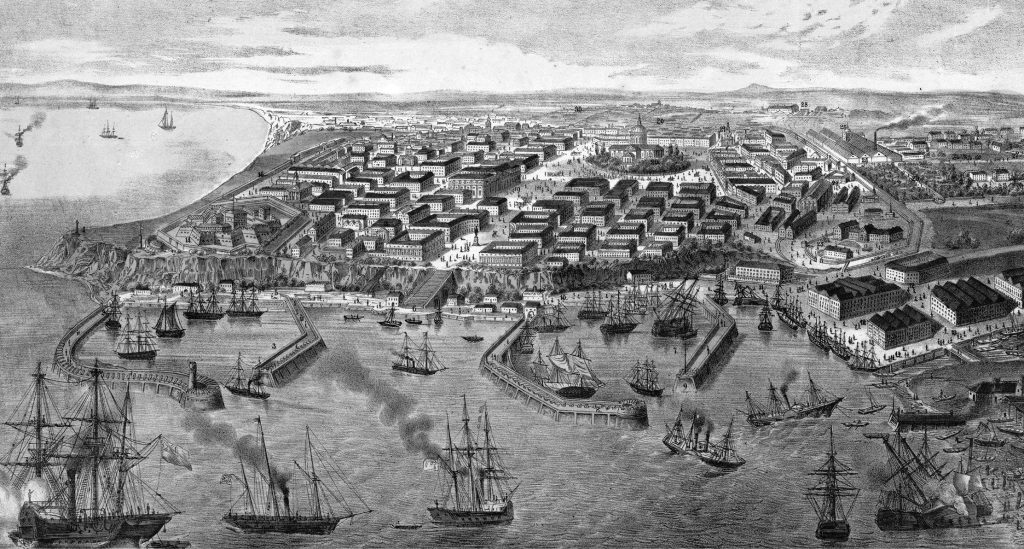
In 1828, the imperial Russian state decided to organize regular industrial exhibitions to showcase advancements in industry, trade, and agriculture. The following year, the first All-Russian Industrial Exhibition was held in St. Petersburg. In 1837, the Ministry of Internal Affairs distributed a plan to provincial governors for organizing exhibitions in connection with an extensive tour of the empire, including the Molotschna colony, by the heir to the throne, Crown Prince Alexander.5 These exhibitions, featuring industrial and agricultural products, were to familiarize the Crown Prince with the economic activities of the regions and to stimulate local industry and trade. This plan became a model for future events.6
In 1848, an imperial decree “On Exhibitions of Manufactured, Factory, and Agricultural Products” outlined the main criteria for evaluating exhibits. In 1850, the Ministry of State Domains approved a set of rules for provincial exhibitions of agricultural products.7 This series of official regulatory acts formalized and guided the development of exhibition practices in the Russian empire, resulting in the establishment of an extensive network of provincial and regional exhibitions. At the initiative of the Ministry of State Domains, state peasants, local landowners, nobility, and colonists, including Mennonites, participated in these events.8
Mennonites considered their participation in these exhibitions as a chance to showcase their achievements, share farming methods, and demonstrate the effectiveness of their agricultural practices. Producers who won an award benefited from the prestige and the cash prize.
First Agricultural Exhibition of Tavrida Province
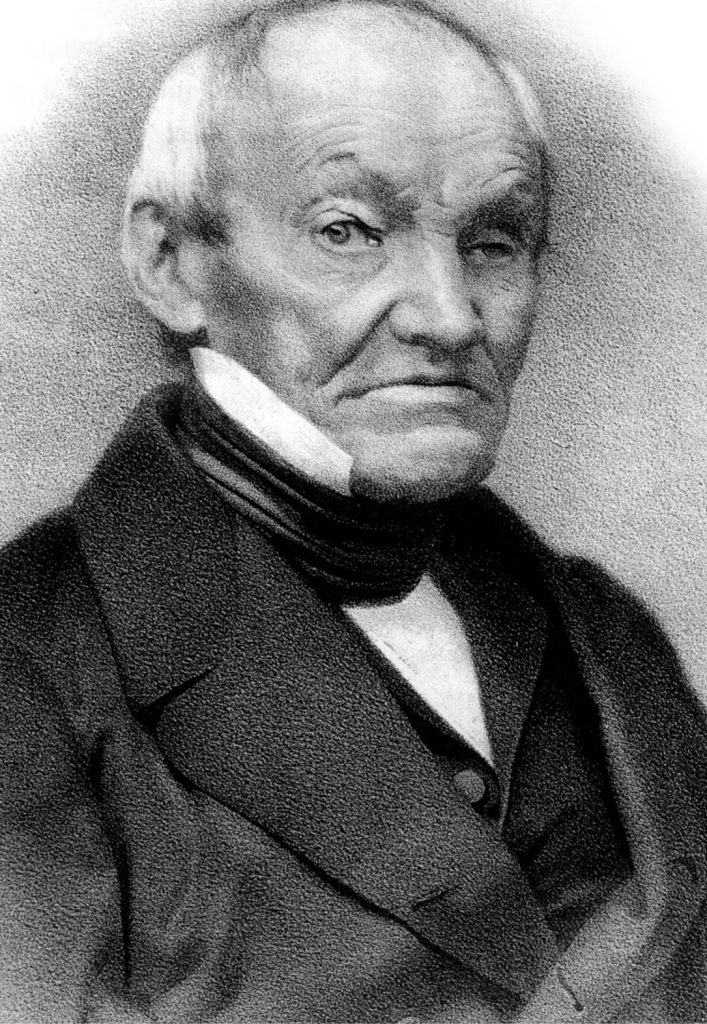
In October 1845, Mennonite producers took part in the First Agricultural Exhibition of Tavrida Province, held in the city of Odessa (Odesa). This was their first experience participating in an exhibition. As a corresponding member of the Imperial Free Economic Society, Johann Cornies was on the exhibition’s organizing committee. His colleagues on the committee included the governor of Tavrida province, V. I. Pestel,9 and state councillor Christian von Steven, an agriculture expert.10 The exhibition featured 1,652 items, some of which were purchased by visitors. According to the catalogue, only 4 out of 343 participants in the exhibition were Mennonites.11
The exhibition catalogue presented a silk-spinning machine by the Mennonite Abraham Janzen, a device unique at the time. State councillor Steven insisted on testing the machine publicly. It proved to be practical, “convenient and easy to use.”12 A local Ukrainian nobleman, I. G. Khristovskyi, purchased the machine “for his peasant women engaged in silk production, as he was satisfied with the samples of silk presented by the Mennonites.” Janzen received a cash prize of 25 rubles for the machine – a substantial amount.13
In the tobacco section, the Albanian, Syrian, and Shiraz varieties presented by Johann Cornies were judged to be the best products (among thirteen entries) in the province.14 The cheese produced by Cornies was also recognized for its premium quality. Based on these results, Johann Cornies was awarded a Certificate of Merit.15 A flat roof tile manufactured in the Mennonite colonies was also recognized as the best in its category.16
St. Petersburg Exhibition
In September 1860, Mennonites from the southern Ukrainian lands participated in the St. Petersburg Exhibition of Agriculture and Industry. Surviving sources document their interest in participating in the exhibition and their desire to present their colonies in a dignified manner. According to a letter addressed to Philipp Wiebe from the director of the Imperial Free Economic Society, the Mennonites won several awards: one small gold medal, one large silver medal, one small silver medal, two large bronze medals, and five diplomas.17
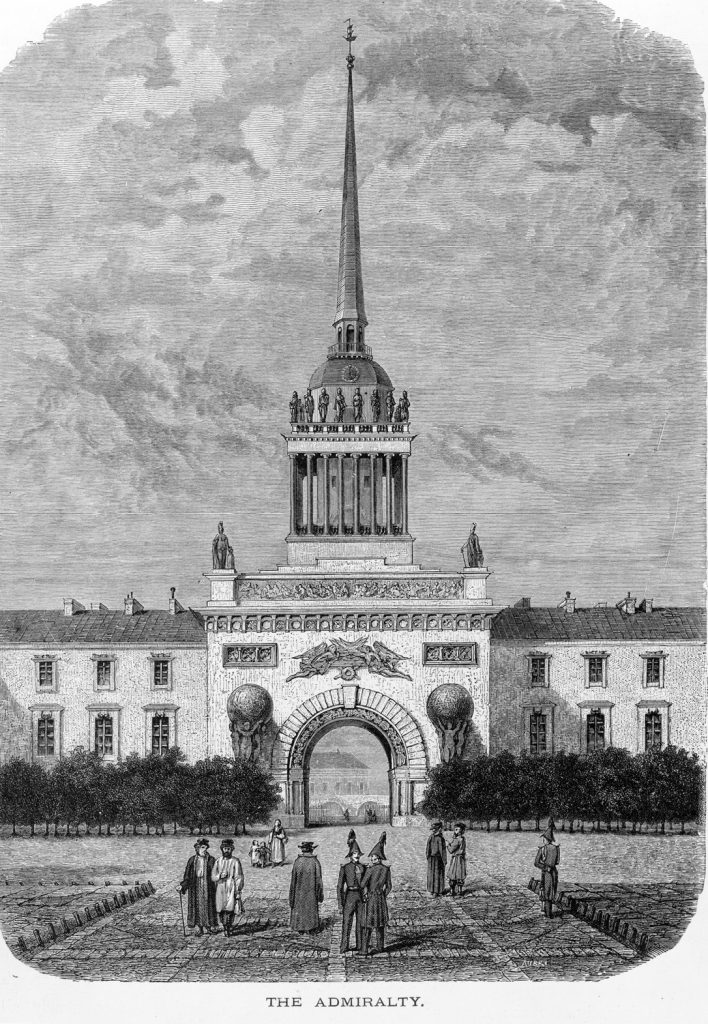
What was sent to the imperial capital? At the top of the list were drawings – plans of Mennonite model farms. Herman Jantzen, a teacher from Orloff (Molotschna colony), depicted the layout of a typical Mennonite farmstead with all its key features.18 The Ministry of State Domains associated the success of the Mennonite communities primarily with their rational approach to organizing agricultural production – the structure of their farms, the distribution of land, and the size of landholdings. On the eve of the adoption of the tsar’s manifesto abolishing serfdom in 1861, as debates over the reform neared their conclusion, it became especially important to showcase the Mennonite village model as a positive example for the entire empire.
The Juschanlee farm, owned by Philipp Wiebe, who succeeded Johann Cornies as chairman of the Molotschna Agricultural Society, provided forty-eight samples of young trees.19 The fleece of a four-year-old Saxon ram was also sent from this estate. The wool was highly valued and sold for 14.5 silver rubles per pood.20
About fifty ears of rye, wheat, barley, oats, millet, and alfalfa were displayed to showcase achievements in grain cultivation. The owners emphasized that these crops were grown without the use of fertilizers and that their impressive yields were evidence of their special approach to crop care.21
Wilhelm Bonnelis, a miller from Schoensee, submitted eight sacks of wheat grain. His products were meticulously sorted to demonstrate each step of its processing. The exhibition samples were supplemented with explanations and descriptions.22
Mennonite craftsmen also garnered attention. Jakob Esau, the blacksmith from Juschanlee village, submitted a currycomb. The catalogue reported that the small horse-grooming tool had been “invented by [Esau] and used with particular benefit in all private and state-run orchards and plantations.”23 Despite its high price (17 rubles), the item was in high demand, and local residents frequently sought out the blacksmith, willing to pay a “premium price” for a quality product. Finally, David Stamm, a craftsman from the village of Neu-Halbstadt, created a horse harness for the exhibition. The reins, featuring elements of leather and metal, were priced at 75 silver rubles.24
The Mennonites also displayed the simple tools they regularly manufactured, hoping to sell them to the exhibition’s visitors. These included shovels, various types of rakes, chains, axes, hammers, and horseshoes.25 Dietrich Jantzen presented wooden items priced at 20 rubles. Karl Lucas, a rope maker from Lindenau, presented fourteen of his products, ranging in price from 60 kopecks to 6 silver rubles.26 At the end of the list of craft products, it was noted that all the items were in demand in the region.
In the silk section, Martin Hamm and Abraham Jantzen represented the Mennonite colonies. The exhibition featured two skeins of silk weighing 23 lots,27 as well as cocoons. In the colonies, a pound of such silk cost 7.50 rubles. Jantzen, from the village of Tiege, displayed three hundred yellow and thirty-five (very rare) white cocoons.28
Philipp Wiebe ensured the exhibition included not only representation from the Mennonite colonies but also contributions from state peasants from the village of Novopavlovka (Novopavlivka) who had apprenticed with Mennonites. Their training had been initiated by Cornies in 1841, and had continued under Wiebe’s leadership. Former apprentice Fyodor Dyak provided fifty ears of high-quality Arnautka spring wheat for the exhibition.29 The price for a chetvert30 of this wheat was 7 silver rubles.
State peasants presented samples of limestone mined from the right bank of the Molochna River. Lime, derived from limestone, was an important material used in construction throughout Tavrida province. Ukrainian blacksmith Alexei Voznyak from Novopavlovka presented a horseshoe he had crafted, with twelve nails (priced at 60 silver kopecks).31
The St. Petersburg exhibition was a significant event, and the state took on various responsibilities related to its organization. The St. Petersburg shipping company Nadezhda managed the transportation of the exhibits to the city. Wiebe personally visited the company’s Kharkov (Kharkiv) office to sign the contract. According to the agreement, the cost of transporting exhibition goods, weighing approximately 240 kilograms, amounted to a substantial sum – 250 rubles and 30 kopecks. The Mennonites were prepared to contribute financially to their participation, and the state offered some discounts on transportation.32 The shipment of the exhibits was completed in advance, on August 22, 1860.33
A total of fifty-five of exhibits were sent to the St. Petersburg Exhibition of Agriculture and Industry by the Mennonites. The collection of exhibits and of necessary funds was accomplished largely through the personal efforts of Wiebe. After the death of his father-in-law, Johann Cornies, in 1848, Wiebe had taken on a leadership role in the economy of the Mennonite colonies. In the early 1860s, an official of the Ministry of State Domains, state councillor Peter von Köppen, acknowledged Wiebe’s significant contribution: “Philipp Wiebe is well-known to the Ministry of State Domains as a correspondent of the Scientific Committee and the manager of the so-called Berdiansk plantation. He greatly contributes to the implementation of the ministry’s plans in the Novorossiysk region. . . . The numerous medals and other honorary prizes repeatedly granted to him at exhibitions are a clear testament to his contributions to agriculture and industry.”34
In 1861, the Ministry of State Domains developed a project to establish a museum of folk industry, which can be seen as another educational program. It planned to display the best items from the St. Petersburg exhibition in the museum. According to Wiebe, forty-seven exhibits were transferred to the museum, as well as “other heavy items important for the local economy, which contribute income to the settlements.”35 For example, the museum was sent the samples of flour produced at the mill of Katarina Toews (a widow from the village of Schoensee) that were exhibited in St. Petersburg. Her samples demonstrated the various stages of flour production. Thus, different grades of flour were exhibited, ranging in price from 3.25 to 9 silver rubles.36 Toews exported her product, marking a significant breakthrough for the regional flour industry. It may be assumed that the mill belonging to Toews was one of the best in the region. Different types of cheese, ham, and samples of tiles and bricks from Wiebe’s facilities were also provided for the museum.37
Agricultural Exhibition in Simferopol
Mennonite products were well represented in the catalogue of the 1863 agricultural exhibition in Simferopol. The “Plant Kingdom” section featured twenty-four exhibits from the Mennonite colonies, including wheat from the Molotschna colony’s harvests of 1857–1863, and exhibits from individual producers displaying their barley, rye, oats, corn, sorghum, millet, and other crops.38 The section on processing industries had eleven Mennonite producers of flour and groats.39 The expanding list of mills signalled the early growth of the private milling industry, although its peak – associated with steam-powered production – had not yet arrived.
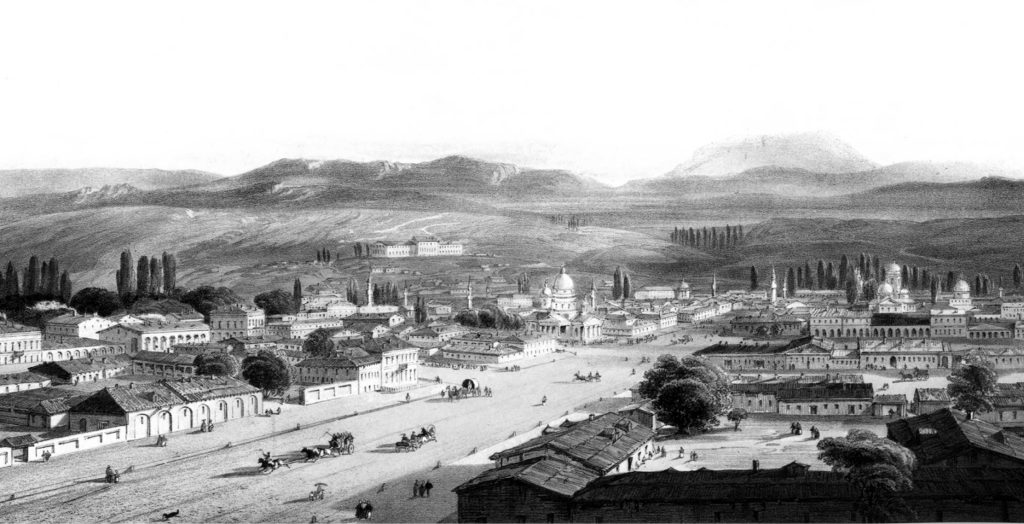
Contrary to expectations, Mennonites did not present strong samples of vegetable crops (e.g., in potato production), though Isaak Friesen from the village of Rosenort exhibited twenty-six varieties of legumes.40 Quite a few successful Mennonite producers were concentrated in the butter (seven participants) and tobacco (three participants) sections.41 The horticulture section reflected the success of earlier efforts in agricultural development. Wiebe presented forty-six varieties of fruit tree seedlings from the village of Juschanlee. The fruit tree section abounded with seedlings of apple, pear, quince, apricot, plum, cherry, and sour cherry, from twenty-two producers.42
Among the most unexpected exhibits presented by Wiebe was the stump of a twenty-year-old poplar tree. Ivan Cornies exhibited part of the trunk of a seventeen-year-old oak tree that stood six sazhen (almost thirteen metres) tall. These exhibits confirmed the success of the forestry program initiated over twenty years earlier. In the livestock section, the Mennonite colonies were represented by Wiebe and Ivan Cornies showing graceful horses, well-fattened sheep, cattle, and pigs.43
According to the catalogue, Johann Wiens of Petershagen led Molotschna in silk production, while the best honey and wax came from the Molotschna communal sheep farm.44 The appearance in the catalogue of Mennonite machines marked a shift in the industry. The exhibition featured four craftsmen: Philipp Wiebe with his sugar beet cutting machine; Jacob Reimer (Karassan, Crimea) with a similar device; Jacob Wiebe, who presented a four-furrow steam-powered plow; and Gerhard Wall (Karassan) with his oil-pressing machine. The products were available for purchase for no more than 35 rubles.45 The list of Mennonite exhibits concluded with the famous roof tiles manufactured on the estates of Philipp Wiebe and Ivan Cornies.46
London International Exhibition
The participation of Mennonites in the St. Petersburg event gave them the opportunity to take the next step – to present their products at their first international exhibition, in London. The London International Exhibition of Industry and Art was a world’s fair held from May to November of 1862. It attracted attention throughout Europe, as it showcased the many technological advances of the industrial revolution. Although Mennonites did not attend the London exhibition in person, they considered it an honour to participate through their contributions.
Starting in 1861, Mennonites collaborated with the Society of Agriculture of Southern Russia (established in Odessa in 1828) to prepare items for the exhibition’s Russian pavilion.47 A special imperial commission, based in St. Petersburg, coordinated the selection of exhibits. It was planned that the pavilion would cover 13,000 square feet.48 According to a letter to Philipp Wiebe, Mennonites and other rural representatives were expected to “represent Russia with dignity and as fully as possible.”49 Collection points for exhibits were located in five transportation hubs: St. Petersburg, Riga, Warsaw, Odessa, and Tiflis (Tbilisi).
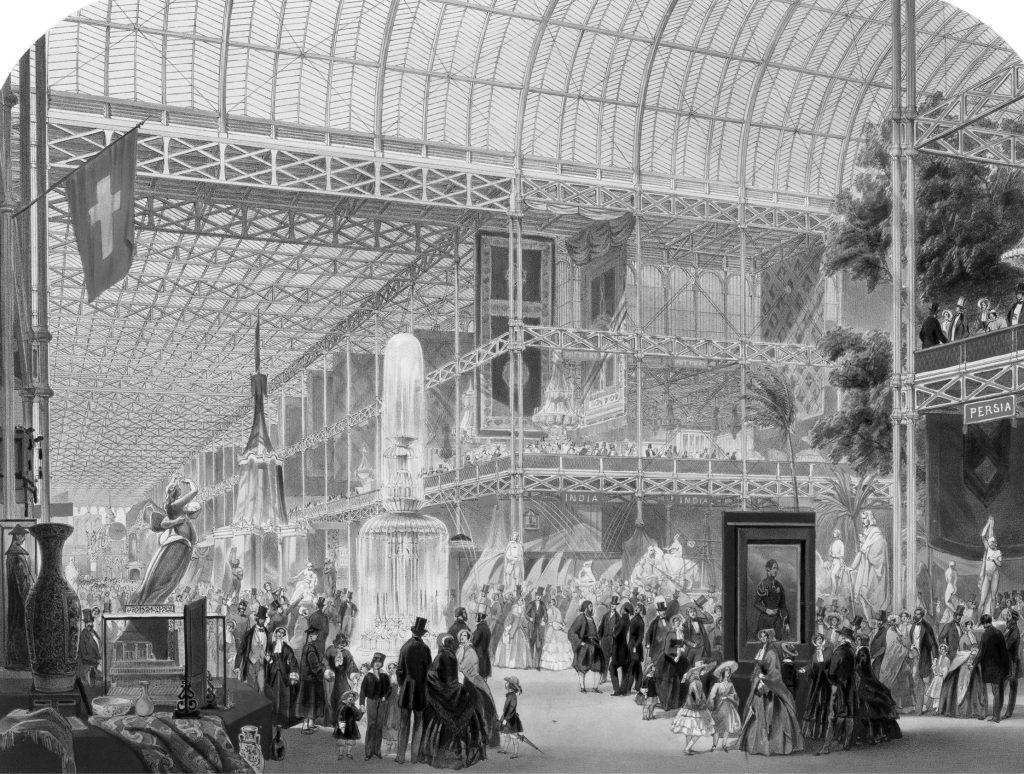
An official brochure about the exhibition circulating through provincial newspapers provided details about the structure and organization of the event. Mennonites would contribute to “Products of Agricultural, Mining, and Manufacturing.”50 Correspondence between Philipp Wiebe and the members of the Scientific Committee of the Ministry of State Domains outlined the terms of Mennonite involvement in the London exhibition. The Ministry of State Domains requested that Mennonites contribute “samples of rural industry and crafts that are most characteristic of the southern provinces, or have gained popularity and trade.”51 The state assumed responsibility for packing and shipping the items from St. Petersburg to London and back. The Mennonite exhibits for the London fair were received in January 1862.52
What did the Mennonites prepare for the London exhibition? Among the contributors living in the Mennonite colonies, there were both well-known and lesser-known members of the community. Philipp Wiebe and F. Klassen offered cheese, ham, wool (from various breeds of sheep), and dried fruits such as apples, pears, and plums. Miller Wilhelm Bonnelis provided flour of various grades, while Ivan Cornies offered samples of plant material.53
The owner of a woolen mill, Johann Klassen, showcased various examples of his products at the London exhibition: cloth, baize, and flannel. David Cornies provided woven baskets, Martin Hamm contributed crates, and Karl Lucas presented thirteen samples of rope products.54 This may have been all the Mennonites could offer the world at the moment; however, it should be noted that these products were among the best in their respective categories in imperial Russia.
This time, in addition to agricultural products, it was proposed that the exhibition include the Mennonite wagon, which had become regionally famous. The organizing committee agreed to this suggestion but stipulated that the wagons must be dismantled and carefully packed.55 The ministry covered all transportation expenses for delivering the wagons.56 It may be presumed that this decision stemmed from negotiations.
A curious situation emerged after the London exhibition. The exhibits that Philipp Wiebe had expected to be returned were never received; it appeared that they had been lost. In response to his persistent letters sent to the Guardianship Committee for Foreign Settlers, he was informed that, according to the decision of the administrators of the Russian section of the exhibition, the Mennonite products had been “transferred to museums in England and other countries, while the perishable foodstuffs, which had become moldy and spoiled, were discarded.”57
Paris Exposition
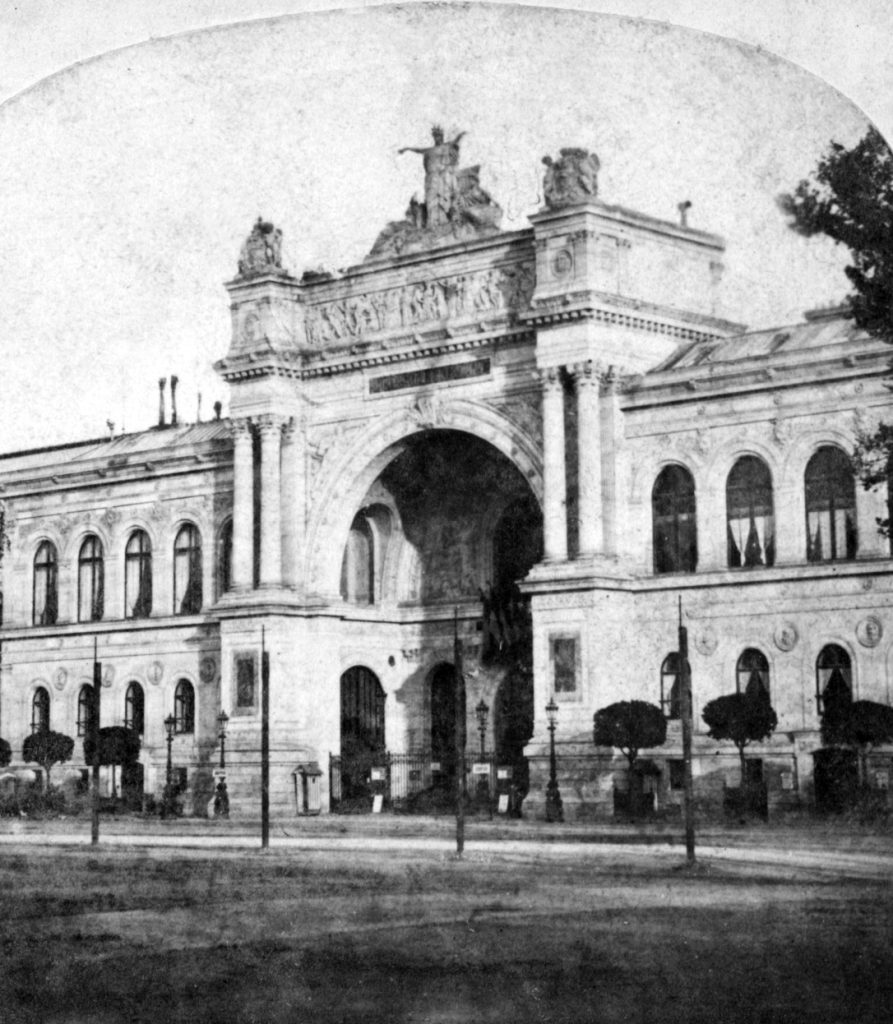
The 1867 Paris Exposition stood out as one of the most significant international events of the mid-nineteenth century. Prominent writers such as Mark Twain, Alexandre Dumas, Victor Hugo, and many others recounted their memories of this exhibition.58 Almost all the European monarchs, including Tsar Alexander II, visited the exhibition, and a special reception was organized for them. It is likely that the Russian tsar took particular interest in the Mennonite exhibits, recalling his visit to their settlements during his journey across the empire in 1837. The renowned Russian scientist Dmitry Mendeleev headed the exhibition’s Russian section. As he noted, the priorities of the exhibition were “first, ethnography, then fine arts, followed by machinery, fabrics, products of metallurgy, and agriculture.”59
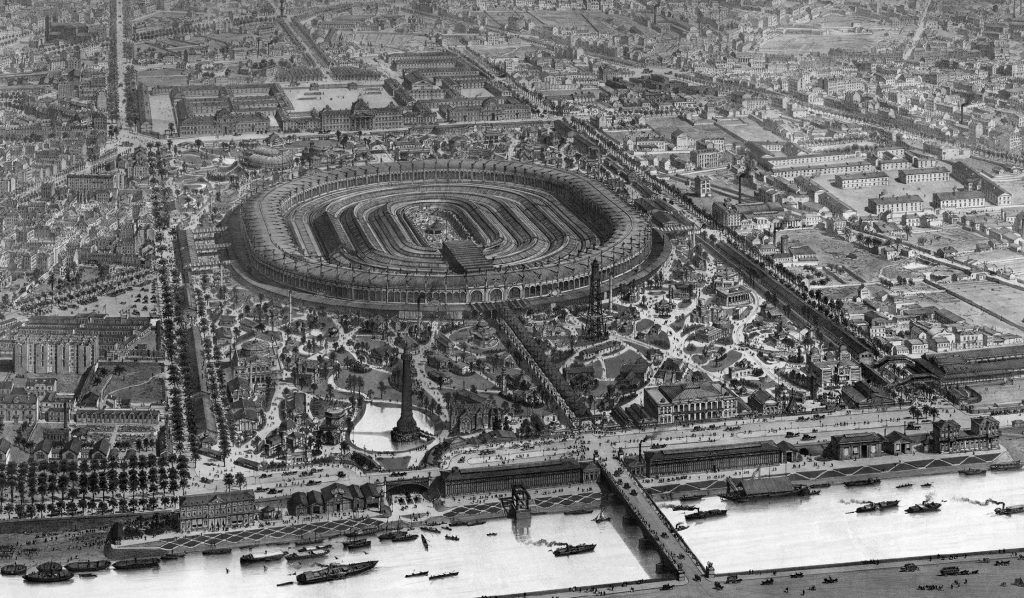
The Russian section occupied eight galleries: the first two featured archaeological artifacts and works of art, while the remaining six displayed industrial and agricultural products. These included numerous wooden items, such as peasant dwellings, a horse stable from the imperial stud farm, facilities for carriages and harnesses, and more.60 The Mennonites, with their agricultural exhibits, fit with the overall concept and direction of the exhibition, although, as before, they did not attend in person.
Preparations for the exhibition began two years before the event. In 1865, the special commission responsible for the empire’s participation in the exhibition was allocated 200,000 rubles for this purpose. The government covered expenses for transporting exhibits, insuring them in transit, renting exhibition space, and constructing and decorating the pavilions. When necessary, the commission collaborated with various state institutions to address organizational and financial matters.61
The Ministry of State Domains prepared a collection of agricultural products, and under the guidance of Philipp Wiebe, the Mennonites contributed to the construction of the imperial image.62 Perhaps for the first time, the names of Mennonites resonated in distant and sophisticated France. Forty-seven exhibits were prepared for the event. The displays included plans of Mennonite colonies, which were exhibited alongside models of typical Russian peasant dwellings (izbas). The Mennonite participants in the exhibition were David Cornies (baskets), Karl Lucas from Liebenau (horse harnesses), Jakob Esau from Juschanlee (simple tools), Philipp Wiebe and Ivan Cornies (various of agricultural products), Bernard Warkentin from Altonau (seed samples), and Jacob Neufeld from Neu-Halbstadt (silk).63
Advances in technology were apparent in the basic agricultural machinery Mennonites sent to Paris. These items included Jacob Friesen’s winnower, Gerhard Harder’s cart (both artisans were from Orloff), and Johann Friesen’s four-furrow plow (Altonau). A map of Orloff drawn by teacher Jantzen demonstrated the advantages of Mennonite agricultural practices.64
We have no evidence as to whether the Mennonites received any prizes. Given the intense competition and the many truly groundbreaking innovations on display, it is probable that their simple items failed to capture the jury’s attention. However, after the exhibition, Philipp Wiebe received a Certificate of Honour from the tsarist state in recognition of the “modest” achievements of both himself and the Mennonites in general. It was reported that the Mennonite model farm plans had attracted the interest of experts and were gifted to the Paris Agricultural Academy.65
Imperial Livestock Exhibition
The exhibition activity of the 1860s concluded for the Mennonites with their participation in the Imperial Livestock Exhibition that took place in October 1869. The honorary president of the Imperial Free Economic Society, Grand Duke Nikolai Nikolaevich Romanov, served as curator of this all-Russian exhibition. The initiative for the exhibition came from the grand duke himself. In March 1869, Philipp Wiebe, who was already struggling with health challenges and preparing to step down from his position, received a letter from the commission organizing the event. As in the past, he was asked to take on the responsibility of selecting skilled livestock breeders and the best livestock for the exhibition. Meanwhile, reports surfaced about Nicholas Nikolaevich’s trip to the southern provinces to observe the state of animal husbandry in the region. The Grand Duke considered Mennonite participation in the St. Petersburg exhibition to be essential.66
According to the organizers, the primary aim of the exhibition was to show off various breeds of domestic livestock popular in the empire: dairy and dual purpose (beef and dairy) cow breeds, sheep, and fattened pigs.67 The exhibition organizing committee was responsible not only for gathering the animals but also for their care during the event, and for arranging their transportation.68 The exhibition imposed no social restrictions: landlords, tenants, peasants, and townspeople were all eligible to participate.69
By decision of Wiebe and other colony leaders, the honour of representing Mennonite agricultural achievements was granted to: Ivan Cornies (13 animals), Philipp Wiebe (9), Peter Schröder (Neuhof) (3), A. Penner (Orloff) (1), Johann Dyck (Rosenhof) (3), P. Schmidt (Steinbach) (4), Andrei Martens (Tashchenak) (5), Michael Hofer (Johannesruh) (1), P. Fast (state plantation in Berdiansk district) (4). The list of participants also included P. Warkentin (Blumstein), B. Warkentin (Altonau), Johann Cornies (Hochfeld), Ivan Neufeld (Hochfeld), and Daniel Schmidt (Steinbach).70 Notably, former Ukrainian students of Johann Cornies and Philipp Wiebe – state peasants from the village of Novopavlovka (Yakov Solop, Kiril Shkurka, Ivan Timoshenko) – also participated in the exhibition.71
Conclusion
The history of Mennonite participation in regional and international exhibitions provides a valuable snapshot of the development of Mennonite agriculture and industry on the eve of the Great Reforms, which transformed the social, legal, and administrative foundation of the empire. Industrial exhibitions were a platform for showcasing and disseminating information about their communities beyond government circles and to gain support from the broader multi-ethnic society.
Philipp Wiebe’s correspondence reveals his pivotal role in the administration of the colonies after the death of Johann Cornies. He became a figure of regional and, to some extent, imperial stature. The exhibition catalogues reveal a fairly limited circle of participants and show that, by the mid-nineteenth century, a true industrial elite had yet to emerge within Mennonite society. We still lack reliable information regarding the exhibition activity of the Chortitza colony. Given that Wiebe was responsible for both colonies, one may hypothesize that he primarily advocated for the Molotschna colony.
Through their involvement in regional, imperial, and international exhibitions, Mennonites, like other participants, stimulated business and forged contacts in the region and across the continent, fostering the progressive trends of cultural exchange and enrichment of national traditions.
Nataliya Venger is a professor of history at Oles Honchar Dnipro National University, Ukraine, and a research associate at the University of Winnipeg.
- A version of this article was published as Nataliya Venger and Olena Khodchenko, “The Participation of the Molotschna Mennonites in the First Regional, National and International Exhibitions (Mid-19th Century),” Modern Studies in German History 50 (2024): 10–20. ↩︎
- For example, the Lepp and Wallmann agricultural machinery factory in Chortitza was awarded 29 gold, silver, and bronze medals at regional, all-Russian, and international exhibitions between 1858 and 1910. See State Archive of Zaporizhzhia Oblast (DAZO), f. 30, op. 1, spr. 1, ark. 159, 227; and DAZO, f. 30, op. 1, spr. 288, ark. 28–29. ↩︎
- Access to these sources was provided by the Mennonite Heritage Archives (Winnipeg). The collection is in Russian and German. ↩︎
- John R. Staples, Johann Cornies, the Mennonites, and Russian Colonialism in Southern Ukraine (Toronto: University of Toronto Press, 2024), 137–86, 217–44; and N. Venger, “Training Orthodox and Muslim Youths: Johann Cornies and the Crown Trainees Project,” Preservings, no. 48 (Spring 2024): 5–14. ↩︎
- P. M. Friesen, The Mennonite Brotherhood in Russia (1789–1910) (Fresno, CA: Board of Christian Literature, General Conference of Mennonite Brethren Churches, 1978), 113–14. ↩︎
- A. Belianovskii, “S chego nachinalis’ sel’skokhoziaistvennyie vystavki Rossii” [How agricultural exhibitions began in Russia] Ekspo Vedomosti, no. 4 (2007): 31. ↩︎
- B. I. Danilchenko, “Rol’ gosudarstvennikh organov Rossiiskoi imperii v organizatsii vystavochnoi deiatel’nosti v seredine XIX – nachale KHKH v.” [The role of state bodies of the Russian Empire in the organization of exhibition activities in the mid-19th to early 20th century], Byulleten’ Leningradskogo Gosudarstvennogo Universiteta im. A. Pushkina, no. 2 (2012): 37–44. ↩︎
- Belianovskii, 31. ↩︎
- A. S. Kravchuk, “Neizvestnyy brat izvestnogo revolyutsionera: khersonskiy i tavricheskiy gubernator V. I. Pestel’” [The unknown brother of a famous revolutionary: V. I. Pestel, governor of Kherson and Tavrida], Prostranstvo i vremya, nos. 1–2 (2015): 202-6. ↩︎
- State Archive of Odesa Oblast (DAOO), f. 89, op. 1, spr. 1966, ark. 2. ↩︎
- P. Gurevich, “Steven Christian Christianovich” [in Russian], in Russkii biograficheskii slovar’, vol. 19 (St. Petersburg, 1909), 365–70. ↩︎
- Pervaia vystavka sel’skikh proizvedenii v Tavricheskoi gubernii [The first exhibition of rural products in the Taurida province] (Simferopol: Braun Printing House, 1846), 10. ↩︎
- DAOO, f. 89, op. 1, spr. 1966, ark. 34. ↩︎
- Pervaia vystavka sel’skikh proizvedenii v Tavricheskoi gubernii, 10. ↩︎
- DAOO, f. 89, op. 1, spr. 1966, ark. 18, 32. ↩︎
- DAOO, f. 89, op. 1, spr. 1966, ark. 29. ↩︎
- DAOO, f. 89, op. 1, spr. 1927, ark. 17 zv. ↩︎
- DAOO, f. 89, op. 1, spr. 1909, ark. 13. ↩︎
- DAOO, f. 89, op. 1, spr. 1909, ark. 2. ↩︎
- A pood is a historical unit of mass equal to 40 funt (Russian pounds) or 16.38 kilograms. ↩︎
- DAOO, f. 89, op. 1, spr. 1909, ark. 2–2 zv. ↩︎
- DAOO, f. 89, op. 1, spr. 1909, ark. 13. ↩︎
- DAOO, f. 89, op. 1, spr. 1909, ark. 12 zv. ↩︎
- DAOO, f. 89, op. 1, spr. 1909, ark. 13. ↩︎
- DAOO, f. 89, op. 1, spr. 1909 ark. 21 zv. ↩︎
- DAOO, f. 89, op. 1, spr. 1909, ark. 13–13 zv. ↩︎
- A lot is a historical unit of mass equivalent to 13.78 grams. ↩︎
- DAOO, f. 89, op 1, spr. 1909, ark. 12 zv. ↩︎
- DAOO, f. 89, op 1, spr. 1909, ark. 12. ↩︎
- A chetvert is a historical unit of capacity equivalent to 5.96 US bushels. ↩︎
- DAOO, f. 89, op. 1, spr. 1909, ark. 12. ↩︎
- DAOO, f. 89. op. 1, spr. 1909, ark. 4. ↩︎
- DAOO, f. 89. op. 1, spr. 1909, ark. 7. ↩︎
- DAOO, f. 89, op. 1, spr. 1929, ark. 19–19 zv. ↩︎
- DAOO, f. 89, op. 1, spr. 1927, ark. 21. ↩︎
- DAOO, f. 89, op. 1, spr. 1909, ark. 8 zv. ↩︎
- DAOO, f. 89, op. 1, spr. 1909, ark. 3 zv. ↩︎
- DAOO, f. 89, op. 1, spr. 1966, ark. 20–24. The producers were: David Penner (Rueckenau), P. Schmidt (Steinbach), G. Wiens (Rosenort), D. Penner (Rosenort), G. Jantzen (Tigerweide), W. Toews (Orloff), and A. Sawatzky (Tiegenhagen). ↩︎
- DAOO, f. 89, op. 1, spr. 1966, ark. 20–24. The group included following entrepreneurs: Johann Derksen and B. Buller (Berdiansk), a widow C. Toews (Schoensee), P. Schmidt (Steinbach), and W. Toews (Orloff). ↩︎
- DAOO, f. 89, op. 1, spr. 1966, ark. 24. ↩︎
- DAOO, f. 89, op. 1, spr. 1966, ark. 27–27 zv. ↩︎
- DAOO, f. 89, op. 1, spr. 1966 ark. 28 zv.–33. ↩︎
- DAOO, f. 89, op. 1, spr. 1966 ark. 33–33 zv. ↩︎
- DAOO, f. 89, op. 1, spr. 1966 ark. 35. ↩︎
- DAOO, f. 89, op. 1, spr. 1966 ark. 22 zv. ↩︎
- DAOO, f. 89, op. 1, spr. 1966 ark. 22 zv. ↩︎
- M. P. Borovsky, Istoricheskii obzor pyatidesiatiletnei deiatel’nosti imperatorskogo obshchestva sel’skogo khoziaistva Yuzhnoi Rossii s 1828 po 1878 god. [Historical review of the fifty-year activity of the Imperial Society of Agriculture of Southern Russia from 1828 to 1878] (Odessa: Frantsov Printing House, 1878). ↩︎
- DAOO, f. 89, op. 1, spr. 1927, ark. 16–18, 30. ↩︎
- DAOO, f. 89, op. 1, spr. 1927, ark. 30. ↩︎
- DAOO, f. 89, op. 1, spr. 1927, ark. 17–24 zv. ↩︎
- DAOO, f. 89, op. 1, spr. 1927, ark. 31. ↩︎
- DAOO, f. 89, op. 1, spr. 1909, ark. 50. ↩︎
- DAOO, f. 89, op. 1, spr. 1909, ark. 52–52 zv. ↩︎
- DAOO, f. 89, op. 1, spr. 1909, ark. 52 “a”. ↩︎
- DAOO, f. 89, op. 1, spr. 1927, ark. 15–15 zv. ↩︎
- DAOO, f. 89, op. 1, spr. 1909, ark. 48–48 zv. ↩︎
- DAOO, f. 89, op. 1, spr. 1909, ark. 47 zv. ↩︎
- V. Shpakov, Istoriia vsemirnikh vystavok [History of world exhibitions] (Moscow: AST, 2008), 45–63. ↩︎
- D. I. Mendeleev, “O sovremennom razvitii nekotorikh khimicheskikh proizvodstv v primenenii k Rossii i po povodu Vsemirnoi vystavki 1867 goda” [On the current development of certain chemical industries in relation to Russia and with reference to the 1867 World Exhibition] in Sochineniya, vol. 18 (Leningrad–Moscow: Publishing House of the Academy of Sciences of the USSR, 1950), 19–186. ↩︎
- A. Khodnev, Parizhskaia vystavka 1867 g. [The Paris exhibition of 1867] (St. Petersburg: Obshchestvennaia Pol’za, 1867), 9. ↩︎
- Russian State Historical Archive (RGIA), f. 338, op. 15, d. 4850-a, l. 11. ↩︎
- DAOO, f. 89, op. 1, spr. 2064, ark. 1–1 zv. ↩︎
- DAOO, f. 89, op. 1, spr. 2064, ark. 4–7. ↩︎
- DAOO, f. 89, op. 1, spr. 2064, ark. 4–7. ↩︎
- DAOO, f. 89, op. 1, spr. 2064, ark. 2. ↩︎
- DAOO, f. 89, op. 1, spr. 2115, ark. 22–22 zv. ↩︎
- DAOO, f. 89, op. 1, spr. 2115, ark. 6. ↩︎
- DAOO, f. 89, op. 1, spr. 1991, ark. 10. ↩︎
- DAOO, f. 89, op. 1, spr. 1991, ark.17 zv. ↩︎
- DAOO, f.89, op. 1, spr. 2115, ark. 43–47 zv. ↩︎
- DAOO, f. 89. op. 1, spr. 2115, ark. 45 zv.–46 zv. ↩︎