Mennonites Migrating to Belize: A British Perspective
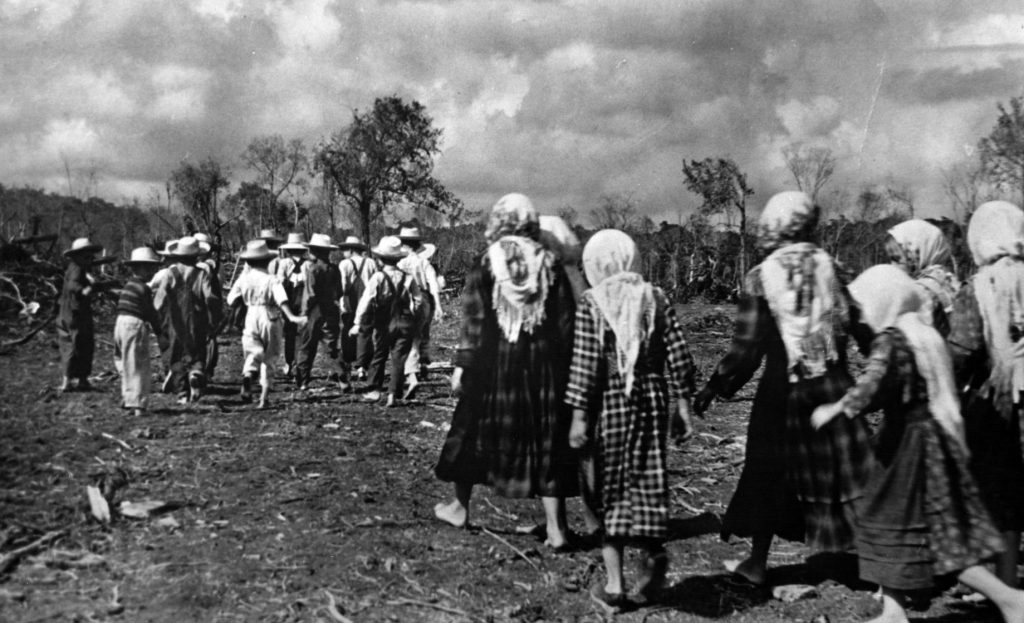
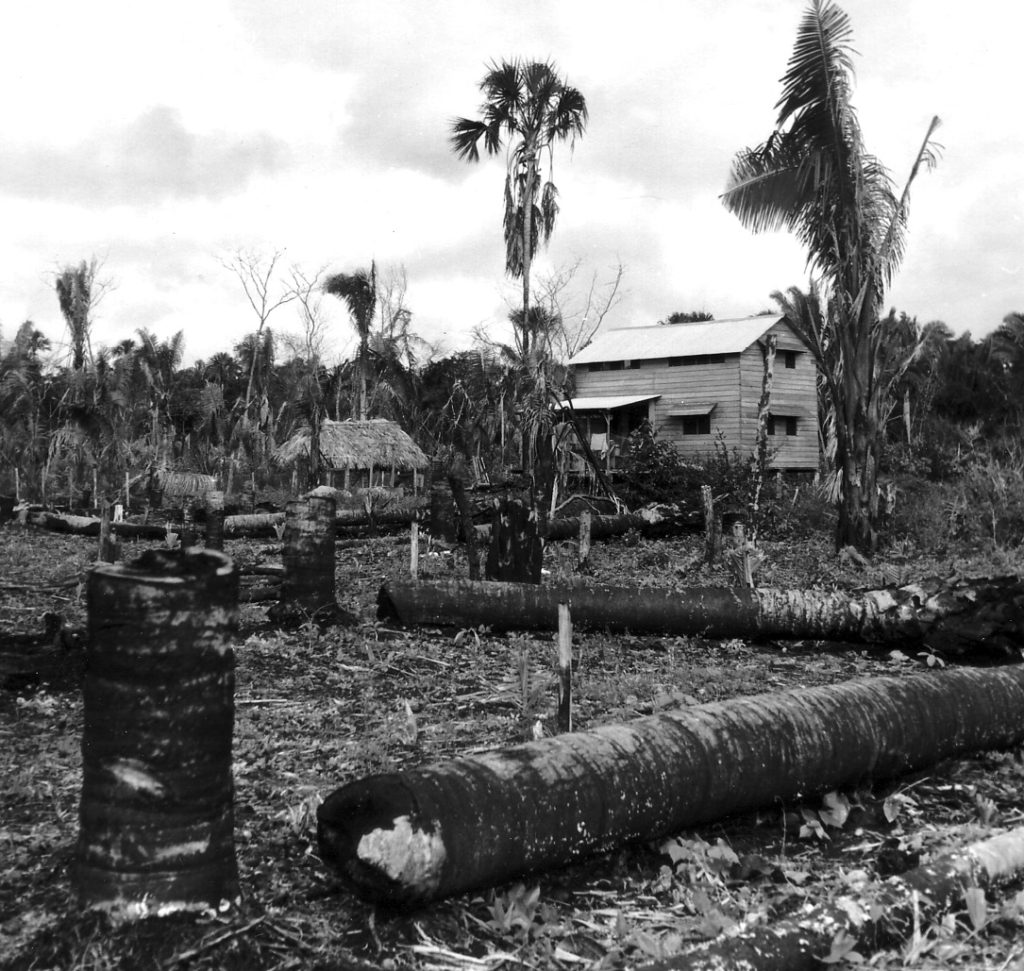
The migration of Mennonites from Mexico to the colony of British Honduras (now Belize) began in the 1950s. Driven in part by a desire to preserve their religious and cultural autonomy, several Mennonite communities sought a new homeland where they could maintain their traditional lifestyle, language, and agricultural practices. The following letters from The National Archives of the UK show the dialogues between the Development Commissioner in Belize and colonial officials in London and Ottawa, and between British consular officials in Mexico, about the possibility of Mennonite migration.1
Colonial Secretary’s Office, Belize
August, 1956
H. C. Baker, Esq.
Colonial Office, London
Dear Baker,
We have recently been visited by representatives of a community of Mennonites living in the state of Chihuahua, Mexico, with a view to their establishing a settlement in British Honduras. One hundred to two hundred families have been mentioned. It appears that many of the Mennonites left Canada in 1922, where they were first settled in 1874, because of their non-combatant principle and their refusal to teach in English schools. They have now run into difficulties in Mexico, principally over the need to acquire more land, and are considering the possibilities of settlement in British Honduras.
The proposal holds obvious attractions for us in that it fits well into our plans to develop the hitherto practically untouched agricultural potential of the Colony, because we are led to understand that the Mennonites, while living very much on their own, are competent and industrious agriculturalists.
However, we would need to be satisfied that they were in other respects a community to be encouraged, and I am writing to the Embassy in Mexico City and the High Commissioner’s office in Ottawa to find out more about them. The purpose of this letter is to let you know what is afoot and to enquire whether you can give us any information or guidance which would assist us in considering the matter.
The representatives who visited us asked a number of questions which I attach in a separate list. These will give an idea of the way in which they are thinking (i.e., towards the establishment of a “closed community”) and it may be that the Colonial Office would wish to give guidance as to the replies which should be sent to them.
The only questions which appear to offer any difficulty are those relating to the teaching of English and to military service.
As to the teaching of English, our legislation does not appear to require that English be either taught or the medium of instruction. However, grants to primary schools are conditional on these things being done. I imagine this would not concern the Mennonites and there seems to be no legal bar at present to their conducting their education in whatever language they choose. There are obvious advantages to basing the education system on a single language. In the case of the Mennonites it may be a good thing to make an exception. How far it is possible to guarantee them this, so long as the community is in the Colony, is difficult to say.
As to military service, I see no great difficulty over this. There is no compulsory military service here (nor was there during the war) so again the question is not an immediate one. If there were, however, presumably we would follow UK practice and exempt conscientious objectors. I believe this is done for the Quakers as a body. Would the Mennonites qualify for group exemption in the United Kingdom?
Yours sincerely,
Robert M. Major
Development Commissioner
Questions asked by representatives of a Community of Mennonites living in Chihuahua, Mexico
1. Would they be allowed to build their own churches and conduct their services in their own language?
2. Would they be allowed to build and run their own schools with all teaching in their own language (High German)?
3. Would they be permitted not to take the standard oath, e.g., in lower courts (they would, I think, be quite happy to affirm)?
4. Would they have freedom from military service in war and in peace “for us, our children, and our children’s children”?
5. Would marriages in their churches be recognized as legal?
6. If after coming to British Honduras they decided to leave would they have the right to take out all their movable property?
7. Would they be allowed to run their own provident fund for orphans and old people?
British Vice Consulate
Chihuahua, Chih., Mexico
September 11th 1956
R. G. Osborn, Esq.
British Vice Consul
British Embassy
Mexico
Mennonite Migration to British Honduras
Dear Osborn,
Upon receiving your letter on the above subject together with copy of the British Honduras Development Commissioner’s letter addressed to Mr. Morgan I have sent for two or three of the leaders of the proposed migration to come to Chihuahua to talk over their tentative plans. They have not yet arrived, but after I have talked with them I will be able to send you a further report.
The Mennonite invasion of this State started in 1922–23. The leaders of the original group of migrants left Canada because the Provincial governments would not continue with the Dominion government’s allowing the Mennonites to dispense with education or their children. Most of the Mennonite communities in Canada did accept State education – to the enormous advantage, of course, of the present generation as is now recognized by most of the unlettered Mennonites in Mexico.
President Obregon of Mexico gave these people freedom in educational and religious matters and exemption from military service. These privileges have always been scrupulously observed by Mexican governments, both Federal and State. But I believe the Ministry of Gobernacion rather feel that such guarantees are now out-of-date and not in keeping with the trend of modern thinking, and it probably will not be long before the Mennonite colonies are forcibly brought to accept normal education. Most of the 25,000 to 30,000 Mennonites in this State were born in Mexico.
For the first many years the Mennonites were about the only producers of small grains, beans, milk, butter and cheese, and eggs in northern Mexico; and they are still the principal producers. They are hard-working and fairly efficient farmers and have been, as all Chihuahua governors recognize, a great economic asset to this State.
Agriculture (with its closely allied industries such as cheese factories and blacksmith shops, etc.) is the only occupation permitted by the Mennonite church. This is why the leaders (the ‘‘Eldesters”) oppose general education. The majority of the Mennonites, however, have no wish to engage in anything but agriculture but they feel that education would enable them to do a better job of this. I might mention that the Province of Ontario now permits the Mennonites to run their own schools, but insists on their holding a certain proportion of their classes in English.
The Mennonites are an essentially peaceful people and as far as possible mind their own business. Renegade Mexicans frequently take advantage of their pacificism to rob their homes and their farms, but they are almost always caught and punished by the State if not by the local municipal police. The Mennonites get along well enough with their town and country Mexican neighbours, though, except for the “colonists” recently arrived from Canada; they do not mix with Mexicans in social or marriage affairs.
The bishops and leaders keep a pretty tight control over the general conduct of the Mennonites, and the enforced public confessions and equally public reprimands of miscreants at their weekly church services undoubtedly serve to steer the people along the strait and narrow. The worst crime in the Mennonite book is that of thievery.
The two hundred-odd families (and probably far more than that) which would like to migrate to British Honduras would want to continue their church’s control over their own morals and internal affairs, and they would want to operate their own schools. But in this respect, they should most certainly be forced to conduct as much as possible of the schooling in English, and be encouraged little by little to broaden their educational interests.
Additional farming land for their increasing numbers is growing scarce in Mexico; and good land is getting very expensive in Canada. This is one reason why many of the Mennonites would like to move to British Honduras. But their principal reason for selecting the Colony is their anxiety to get back under the British flag. They seldom run afoul of the law, or even of minor regulations, but they frequently run afoul of grafting officials, and they want to live in a country where justice is the rule and not the rather rare exception.
With the untouched fertile lands available in British Honduras, and the Colony’s need for greater production of foodstuffs, a fair-sized Mennonite colony would certainly be a very great asset. They would soon fill or come close to filling the Colony’s requirements of dairy products and small grains, etc., etc. They would probably want to branch out into lumbering – if this were indicated and permissible – and into cultivating tropical crops and fruits with which they are not yet acquainted.
If as many as two hundred families should migrate to British Honduras to start with I rather think one of the leaders or bishops would accompany them, but I will know more about this after I have talked with them.
When the time comes to think about such things the best way to move a large group to Belize might perhaps be to make arrangements with the Henderson Line for one of their bi-monthly freighters to carry them from Vera Cruz as deck passengers.
Yours sincerely,
John Pope
British Vice Consul
Office of the High Commissioner for the United Kingdom
Earnscliffe, Ottawa
20th September, 1956
Robert M. Major, Esq.
Development Commissioner
Colonial Secretary’s Office
Belize, British Honduras
Dear Major,
Thank you for your letter of 31st August about the Mennonites in Mexico who wish to settle in British Honduras.
I have consulted the Department of Citizenship & Immigration here and enclose some material about the Mennonites in Canada with which they have provided me.
The review of the recent book by E. K. Francis, In Search of Utopia: The Mennonites in Manitoba, which was published in Citizen (an official publication of the Department of Citizenship & Immigration) in June 1956, gives quite a useful account of the Mennonite community in Manitoba from which the group in Mexico broke away in the 1920s. If you would like me to purchase a copy of the book itself, which is available at the Manitoba Historical Society in Winnipeg, would you please let me know?
As you will see from the material enclosed, there are a number of different sects of Mennonites in Manitoba, some of which are more extreme in their opinions than others. A certain number of Mennonites have become merged with the general population but the great majority still live in more or less self-contained communities preserving many of their old customs and ways of life.
Most of the Manitoba Mennonites came from Russia in the 1870s. The Canadian authorities granted them exemption from military service and, apart from freedom to practice their own religion, they were also allowed to run their own schools, etc., in their own way. There are still many Mennonite schools in Manitoba but with the passing of time they have gradually had to accept the introduction of the Provincial school system including the use of the English language in teaching. The majority of the Mennonites now mix with other Canadians in schools and in other activities, but opposition to the Provincial school system and to the penetration of their own community by other modern ideas and a general fear of “secularization” led in the 1920s and again in 1948 to the exodus to Mexico and Paraguay of some of the more orthodox elements who wanted to continue living in more or less complete isolation from their neighbours. In spite of these difficulties I understand that there has at no time been any actual conflict, let alone violence, between the Mennonites in Canada and the authorities. In general, they are most honest and law-abiding people, deeply religious and good farmers.
It seems likely, however, that the Mexican group which has now approached you for permission to settle in British Honduras may be composed of the more conservative and orthodox type of Mennonites, and before deciding to admit them it would be as well for the British Honduras Government to make quite clear to them what facilities or exemptions from normal administrative arrangements they are or are not prepared to grant.
I am sending a copy of your letter and of this reply (without enclosures) to the United Kingdom Trade Commissioner in Winnipeg. If he has anything to add to the above, I will let you know.
Yours sincerely,
George Crombie
British Vice Consulate
Chihuahua, Chih.
October 11th, 1956
R. G. Osborn, Esq.
British Vice Consul
British Embassy
Mexico
re British Honduras and Mennonites.
Dear Osborn,
Since writing to you a month ago on this subject I have talked with more of the Mennonites who wish to emigrate to British Honduras.
After their autumn crops have been harvested about a dozen more plan on taking a look at the country for themselves, and probably the same Peter Wiebe who went before will accompany them.
The “presiding” bishop, eighty-year-old Isaac Dyck, of Camp 16, does not approve of the move at all, but he is apparently not offering any active opposition to those who want to go.
Bishop Frank Dyck of the Santa Elena colony, a more modern-thinking leader of the sect, is all for it, and says he will go too.
As I believe Peter Wiebe told Mr. E. Caffery, Director of Information and Communications, in Belize, the two or three hundred families most keen on emigrating would need at least fifty thousand acres of land, mostly tillable but part grazing land. The section of country they seem to like most is around El Cayo, some seventy miles west of Belize. The land would not have to be all in one place. It could just as well consist of two or three separated areas.
Regarding my suggestion that the Mennonites be obliged to give instruction in English in their church schools, there seems to be rather violent opposition to this idea among the leaders, and consequently most of the people, while personally favouring a more liberal education, would not dare to antagonize the bishops in this respect. So unless they were entirely free to carry on their own education (or lack of it) in the Colony, only about a dozen families would emigrate.
The only schooling which the Mennonite church schools give here in Mexico is, for boys, from the age of six to thirteen, and, for girls, from six to twelve. The Mennonites in Canada and the United States of course adhere to the laws on education and do so willingly.
The whole deal hinges on whether or not the Government of British Honduras wish to grant these people the religious, military, and educational freedoms they asked for. If so, some two hundred to three hundred families would want to emigrate before next spring or summer, with probably an even larger contingent wanting to go a year or two later. And they would have the full moral and financial support of the Mennonite church – except for the disapproval of Bishop Isaac Dyck and a few other old-timers. Without these “freedoms” only about a dozen would dare to emigrate.
I hope the Government of British Honduras may be able to give the Embassy an idea of their feelings in this respect before the next batch of Mennonite scouts are ready to visit the Colony.
Yours sincerely,
John Pope
British Vice Consul
- Proposed establishment of a Mennonite settlement in British Honduras, Colonial Office and Commonwealth Office: West Indian Department: Registered Files (WIS Series), CO 1031/1959, The National Archives of the UK, Kew. ↩︎