
But Not Manitoba: One Delegate’s Impressions
Ernest N. Braun
A while ago, my friend Blake Hamm and I were discussing the twelve delegates (ten Mennonites, two Hutterites) who visited Manitoba in June 1873. Some of them kept journals that were later published. We noticed that we had not seen any published journals by Wilhelm Ewert, a minister from West Prussia, or from Jacob Buller, also a minister, from the village of Alexanderwohl in the Molotschna colony. Why was there nothing from them? A quick email to John Thiesen at the Mennonite Library and Archives at Bethel College revealed a cache of untranscribed documents, totalling 116 scanned images, most of which were letters these two delegates had written to their families. Of course, these letters were in German, and in what we refer to as Gothic cursive – chicken scratches. Blake found software to do the rough transcription, and I edited that. A hundred-plus hours later, all the documents were transcribed and translated into English.
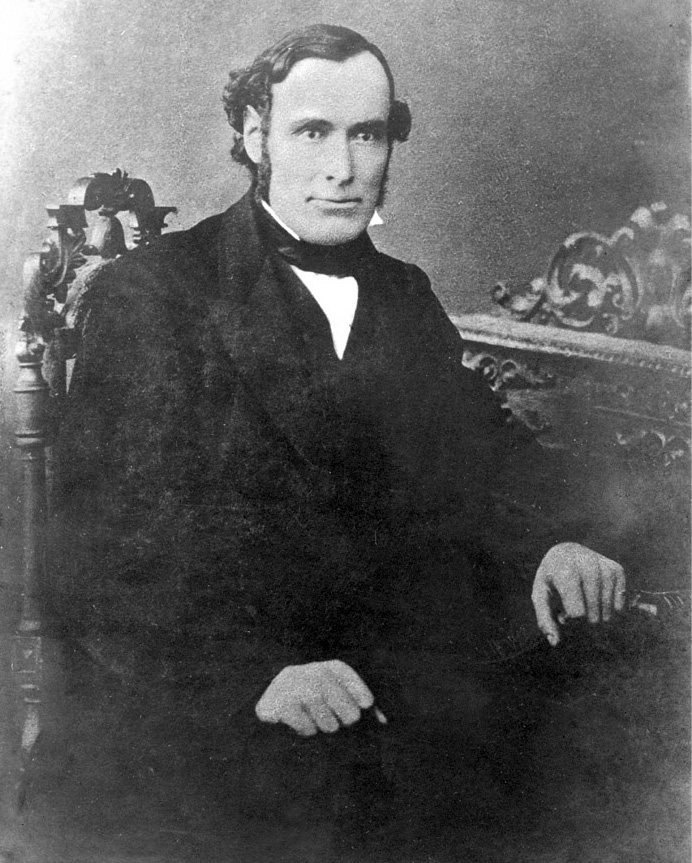
What turned up was interesting. As we know, starting in 1873 and continuing into the 1880s, most of the Mennonite emigrants from imperial Russia ended up in the United States. It was intriguing to read the impressions Ewert and Buller shared with their families and churches back home. I will focus my remarks here on Ewert and his comments about Manitoba. Our translations of Ewert’s first three letters to his family follow this article.
In his second letter written to his family from Fargo, after spending time touring in the Dakotas, Ewert had already seen enough to report the following:
After everything I’ve seen and heard, I have concluded that we can’t look for anything better than this area. Where there is more timber, it will either be farther away from populated areas or the land will no longer be available in large blocks.
The first hint of Ewert’s opinion of Manitoba appears in his description of the voyage down the Red River from Moorhead, Minnesota, to Fort Garry, Manitoba, on the steamboat International:
The trip went quite well so far, but it was immediately apparent that we were no longer under American stewardship. On the Canadian boat we greatly missed the unassuming, courteous treatment one experiences in America, from the waiter to the president, and although we paid well, the food was very poor.1
Then he gives himself away a little, when he describes the group’s reception by Lieutenant-Governor Alexander Morris in Winnipeg:
There we were greeted with great friendliness, served champagne and biscuits, and the advantages of the country were presented to us. Since I was already biased against this country from the inquiries I had made previously, my acquaintance with its population aroused even more antipathy towards it, and I paid very little attention to the pretenses and flattery offered to us.
While at Government House, the Manitoba officials emphasized that the eight townships of land they were offering would be free of charge and were entirely reserved for the Mennonites. Ewert points out that was not accurate, since the Hudson’s Bay Company was entitled to nearly two sections per township, and that other land was restricted by existing Métis river lots. When he later reported on his impressions gleaned in Manitoba, Ewert referenced the Red River Resistance and Métis struggles against the government, concluding that many of the Métis had simply given up and left. He also referenced Treaty 1 and questioned whether the government would be able to keep the promises made in it. He observed, moreover, that a large immigrant settlement would drive the bison away, predicting that this would adversely affect the Indigenous people who depended on it, and would radically change the dynamics between them and European settlers.
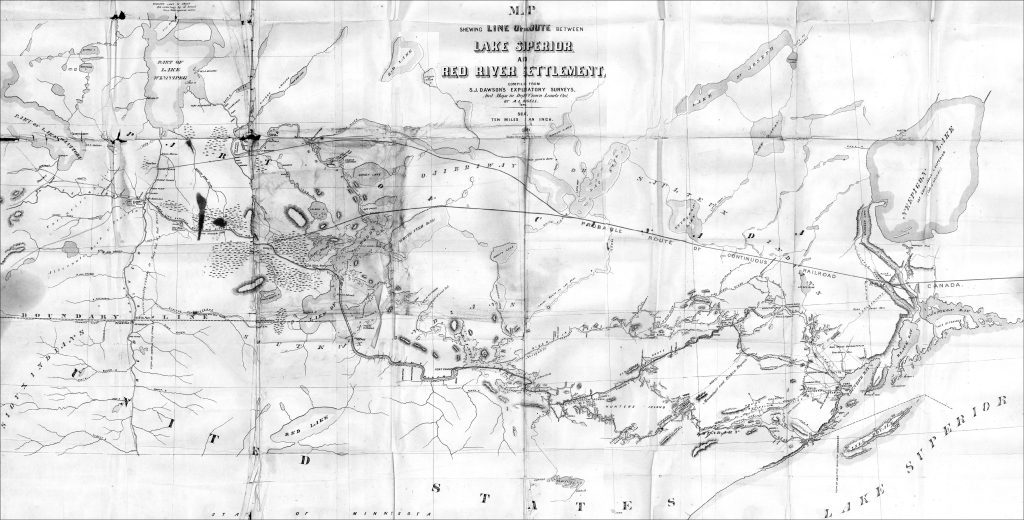
It seems to have been a fairly lively meeting, with Manitoba officials offering advantages, and Ewert shooting them all down. Here are five examples:
1. Canada will provide transportation from the Black Sea to Winnipeg for $55 using the all-Canadian route via the Dawson Trail. Ewert pours scorn on the Canadian offer to transport the Mennonites via the Dawson route, pointing out that everything would have “to be unloaded from the wagon onto the boat and vice versa about twenty-six times,” noting that this alone would add at least four weeks to the six-week journey, almost doubling its length, and arguing that, in comparison, Fargo, Dakota Territory, was only three days from New York by train.
2. But look at the market potential: “Manitoba was considered to have a great advantage because all products here are more expensive than in the United States.” He responds, sure, but those prices will only continue until the Mennonites out-produce the small Manitoba market – “the products would be worthless in the future.”
3. Oh, but Mennonites can export their surplus products “up the Red River” (to the United States). Ewert counters, yes, but “the shipping company gets paid up to 1.5 cents per pound of freight [to Fargo], which is exactly as much as wheat is worth here.”
4. Manitoba will not depend on shipping companies because a railway to the Pacific is coming. Ewert gives this no credence at all, saying, “We were then led into thinking that the intention was to build a railway from the Atlantic to the Pacific, which was projected to run 40 miles from the settlement and would cost roughly $150 million, for which the necessary cash was still lacking.”
5. Manitoba will have an abundance of heating material since vast supplies of coal have been discovered nearby for fuel and for export in exchange for building materials from the United States, creating great prosperity for Manitoba. The earliest verifiable coal deposits in Manitoba were discovered in 1879, so any claim of huge coal deposits in 1873 was, at the very least, not based on fact. Ewert describes how through inquires made after the meeting, “We learned that the report of the coal discovery was a ruse, that the journey on the Dawson route was life-threatening, [and] that the reason that no grain was cultivated is that the grasshoppers often destroyed it.” He remarks, “All this information led me to conclude that we must really be considered to be very stupid.”
He goes on to draw another contrast between the US and Manitoba, regarding alcohol: “Throughout America, I had encountered lively, civilized activity, for there are entire states where no spirits may be served. At many railway stations you cannot even get beer in the restaurants. . . . In Manitoba, however, old and young, . . . [all] cavort in the drinking dens, bickering, gambling, and fighting.”
Tour of the East Reserve
Ewert came to his conclusion about settlement in Manitoba before he and the other delegates had even visited the townships of what would become the East Reserve, which he relates in detail. After overnighting at the Davis Hotel, and after the delegates were photographed in front of the Dominion Lands Office, the trek began. Ewert sarcastically implies nefarious motives for the provisions officials loaded for the trip: “eight barrels of schnapps and wine were taken, but to the chagrin of the gentlemen we made little use of them.”
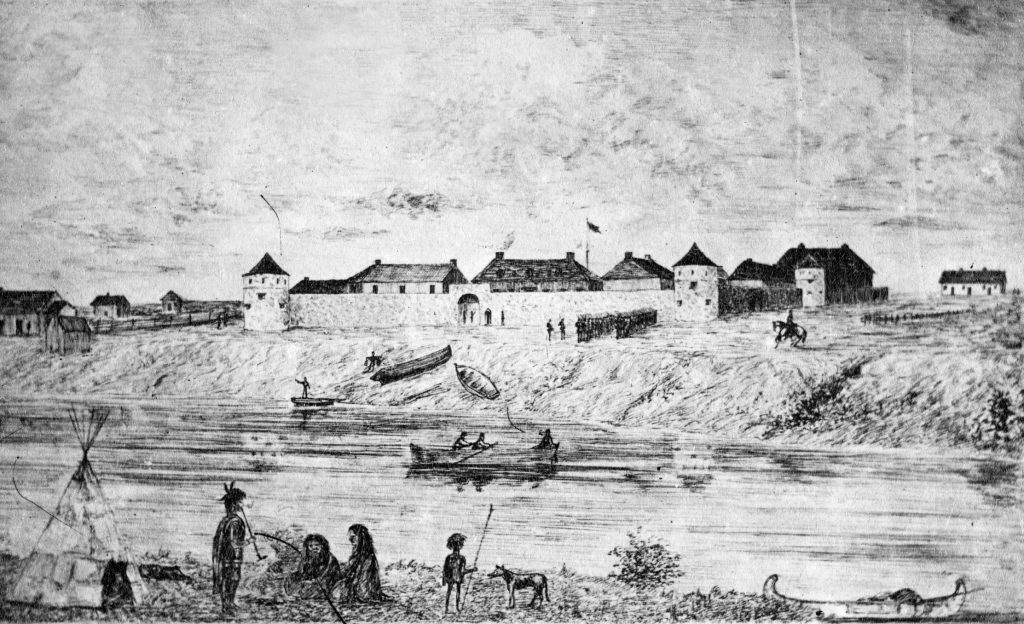
Ewert remarks that before they even got to “the homeland chosen for us,” “we got stuck in the swamps about ten times and had to pull out first the horses and then the wagons,” with diplomats, ministers, and drivers all putting their shoulders to the wheel.
Upon arriving at Pointe-des-Chênes (Ste. Anne) Ewert was unimpressed that “a government building, . . . set up to accommodate emigrants, was not opened to admit us, so we were forced to pitch our tents in the mud and rain.” It was only the kindness of the caretaker of the adjacent Hudson’s Bay Company post that saved them from the rain.
Ewert was also unimpressed that the wagons carrying the food got lost that first day, and only arrived past noon the next, so they made a short day of it, finally getting to the boundary marker, and seeing the reserved land. He saw a water table so high that dugouts were brimful of water, boulders abounding everywhere, and a woodland of aspens “the thickest of which were not more than eight inches in diameter, which could not be reached at all in summer because they stood in a bog.”
The second night, celebrated with hymns around the campfire, was uneventful. The next day they met some settlers at Clear Springs, whom he describes as having “chosen nice places and [who] were lured here as victims of unscrupulous agents – in isolation, cut off from all traffic.” Bertha Mack was able to converse with the delegates in German and encouraged them to settle nearby. The next stretch south, however, was a nightmare of swamp and impassable coulees filled with water, forcing them to chase the horses across and pull the wagons through with the reins, with everybody pushing. That was merely the prelude to a night all the delegate narratives mention:
But here I endured a plague like almost never before in my life. Because it was muggy and rainy, the mosquitoes were so bloodthirsty that one suffered terribly from their bites. There was no thought of sleeping, and I spent the night smoking the tents of my travelling companions, using a frying pan filled with hot coals and fresh grass, to drive the mosquitoes out of them, so that those who were less sensitive than I could at least get some sleep. I wrung my hands in desperation and whimpered in pain. In the morning, everyone had swollen faces and hands from the mosquito bites.
The next morning, Saturday, June 21, Ewert and five others decided enough was enough, and went back to Winnipeg the shortest way, which was via the Crow Wing Trail. In Winnipeg, happily reunited with the American railway agent Hiller, Ewert and the five delegates immediately boarded the steamship for Fargo, from which he wrote his conclusion: “For the reasons given, to which a great many drawbacks can be added, I consider it quite impossible to set up a settlement here.” But not all agreed: “Some of the deputies, however, seemed to have no eyes, ears, or feelings for all this, but rather their approval and willingness to lead their people into this wasteland.”
While we may marvel at Ewert’s understanding of the Manitoba situation, there is an irony in his conviction that a successful Mennonite settlement in Manitoba – particularly on the East Reserve – was not possible. His sons Heinrich and Benjamin would spend a good part of their professional lives in Manitoba, Heinrich heading up the school in Gretna that became the Mennonite Collegiate Institute. Manitoba now has one of the largest concentrations of Mennonites from imperial Russia/Soviet Union in the world. The Rural Municipality of Hanover, corresponding roughly with the East Reserve, has had the highest per capita rate of charitable donations in Canada for the last generation at least. Despite Ewert’s judgment, seven thousand Mennonites arrived in Manitoba in the 1870s, where they would survive and eventually thrive.
Ernest N. Braun is a retired educator and resides with his wife Doreen in Niverville, Manitoba. He devotes his time to researching and writing on topics of local Mennonite history and is co-editor of The Historical Atlas of the East Reserve (2015).
- Most quotations are taken from a published version of Ewert’s June 29, 1873, letter from Fargo, Dakota Territory, printed in Der Mitarbeiter in October 1929 and reprinted in Die Mennonitische Rundschau. It was published again in the Jan.4 , 1939, issue of Der Bote. ↩︎