
Silk Reeling Among Mennonites: An Introduction
James Urry and Rachel Pannabecker
It may appear strange that Mennonites, ostensibly “plain” in life and dress, were associated with a luxury item such as silk, even though Dutch Mennonites had long been involved with the silk industry.1 The involvement of Mennonites in silk production in imperial Russia and in North America is occasionally referred to in the literature but has not been investigated in detail. Almost nothing has been said about Mennonite invention and use of silk reelers or their implications for developments in imperial Russia and America.
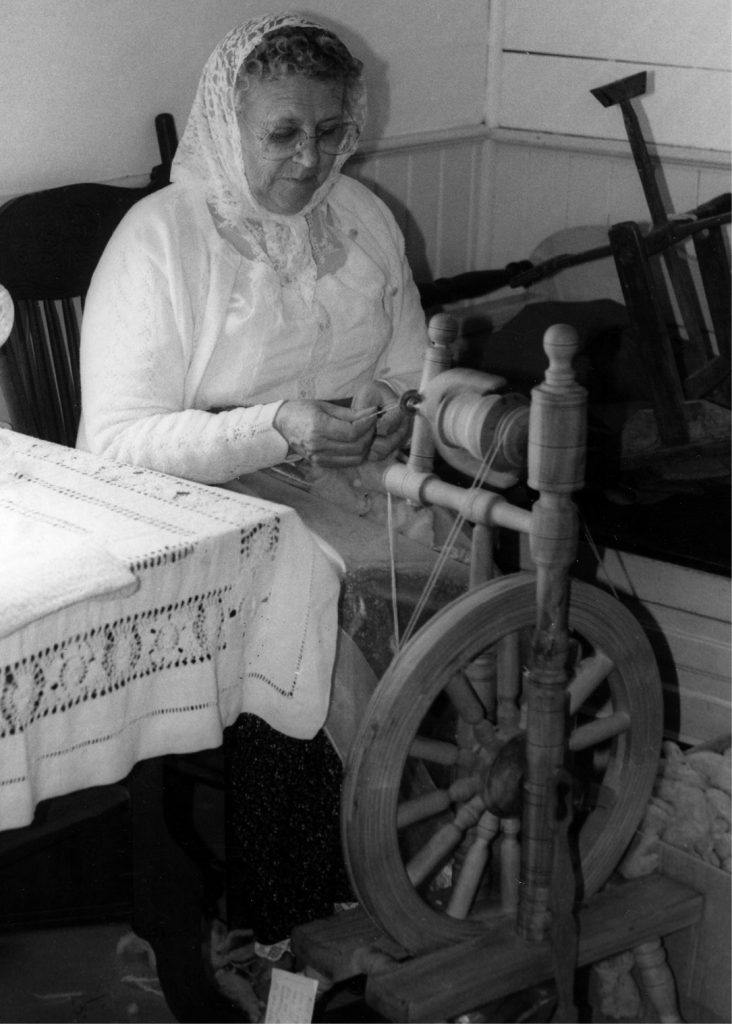
Sericulture, or farming silkworms, is the first stage in producing yarn for the silk textile industry.2 It is based on the cultivation of a domesticated moth (Bombyx mori) that can produce between 350 and 500 eggs, with 4,000 eggs providing a kilogram of silk. With the warmth of spring the eggs hatch into voracious caterpillars that feed principally on mulberry leaves, shedding their skin through four molts as they grow to ten thousand times their original size. In preparation for the pupa stage, caterpillars form a cocoon by extruding a liquid that solidifies into one long, continuous filament.
Before harvesting the filament can begin, cocoons that are too small, damaged, stained, or pierced by the moth are set aside. The cocoon must be reeled before the pupa changes into a moth, approximately two weeks after the cocoon is completed. If more than a week has passed since the cocoon’s completion, the pupa must be “stifled” by immersion in boiling water, exposure to steam, or drying in the sun to prevent the moth from emerging. Otherwise, the pupa is killed during the process of reeling. The goal of reeling is to unwind the cocoon’s continuous filament to achieve a long, very fine yet durable thread that is smooth and uniform in diameter and ready to be twisted into yarn and woven into fabric.
Although sericulture first developed in China over four thousand years ago, the knowledge and machines required to produce silk gradually spread westwards. In Europe, silk industries existed in various medieval states and by the eighteenth century were well established in Italian provinces, Spain, and France. Silk clothing was costly to produce and consequently was a luxury commodity, particularly prized by aristocrats. Many European rulers were eager to develop local silk industries and produce such a valuable product. At first silk production was a cottage industry and silk reeling involved simple machines sufficient to reel filaments from cocoons to obtain raw silk. During the eighteenth century, improvements to reeling machines were developed in areas of Italy and France to produce finer, quality yarn that could be woven and dyed into valuable textiles. Silk industries of the regions of Piedmont in Italy and Lyon in France were particularly advantaged by these new technologies. In the nineteenth century, as the Industrial Revolution advanced, mechanical innovations in other textile industries such as cotton, linen, and wool contributed to further innovation in the design and manufacture of silk machines.3 Inventors worked to simplify the production of raw silk through improved reeling machines to meet the demands of an industry increasingly concentrated in factories. Gradually, the industry transitioned from domestic production to centralized reeling and weaving centres.
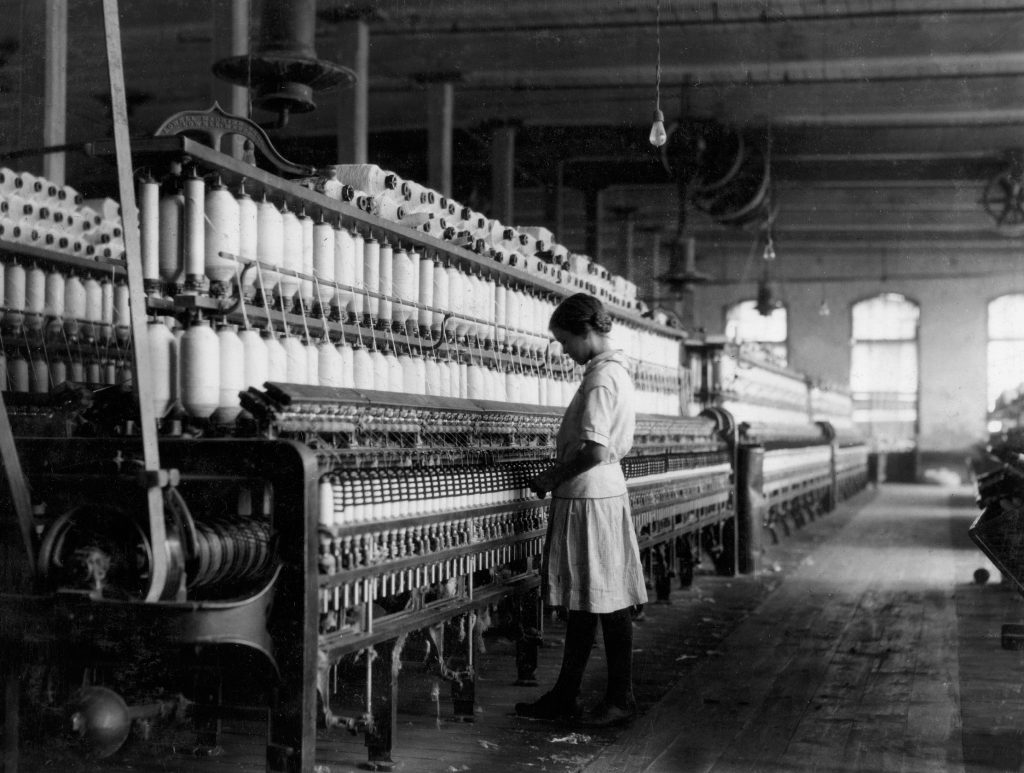
These technological developments had significant consequences in the political, economic, and social lives of silk producers. Those who controlled the people and machines involved in producing this valuable material wished to protect and develop their investments. At first, these were rulers of the day, and technological advances were copied or even stolen; later, businessmen with capital funded innovation and economic development. Skilled workers were encouraged to relocate; many were women, especially those involved in reeling. The transition from a cottage industry to factory production involving more complex machines foreshadowed the rise of other industries, the growth of industrial towns, and major changes in forms of work. Mennonites might not have worn the colourful, fashionable clothing made from the silk they produced, but their involvement in its production heralded other changes to their lives.
For their assistance we thank Ernest Braun, Conrad Stoesz, Leonard Friesen, Renae Stucky, John Thiesen, Renae Peters, Peggy Goertzen, and the Peabody Historical Society.
- Cor Trompetter, Agriculture, Proto-Industry and Mennonite Entrepreneurship: A History of the Textile Industries in Twente, 1600–1815 (Amsterdam: NEHA, 1997); and Peter Kriedte, Taufgesinnte und großes Kapital: Die niederrheinisch-bergischen Mennoniten und der Aufstieg des Krefelder Seidengewerbes (Göttingen: Vandenhoeck & Ruprecht, 2007). ↩︎
- See Robert N. Wiedenmann and J. Ray Fisher, The Silken Thread: Five Insects and Their Impacts on Human History (New York: Oxford University Press, 2021), sec. 1. ↩︎
- For a general overview, see Giovanni Federico, An Economic History of the Silk Industry, 1830–1930 (Cambridge: Cambridge University Press, 1997). ↩︎