
History under Attack: A Ukrainian Archives Project
Nataliya Venger and Aileen Friesen
In May 2024, the Centre for Transnational Mennonite Studies (CTMS) at the University of Winnipeg launched the Mennonite Ukrainian Archival Project with financial support from the Schroeder Foundation, established by Walter and Maria Schroeder. Our goal for this project was to collect, document, and preserve documents related to Mennonite history that were placed in jeopardy by the Russian Federation’s February 2022 invasion of Ukraine. CTMS hired Dr. Nataliya Venger, a displaced scholar from Dnipro National University, to coordinate the project, managing researchers in Dnipro and Zaporizhzhia (Zaporozhe) tasked with digitizing documents related to Mennonite history. The continued bombardment of Ukraine by the Russian Federation has made these types of digitization projects essential to future historical research on southern Ukraine.
Over the past two years, we have acquired tens of thousands of new archival documents that add to the microfilmed collections previously gathered by historians David Rempel, Harvey Dyck, and Paul Toews. Eventually these documents will be made available at the Mennonite Heritage Archives in Winnipeg, complete with detailed finding aids created by Dr. Venger. This new collection sheds light on the social, political, cultural, and economic transformations that occurred from the late imperial period through the revolutionary period and into the establishment of Bolshevik control over southern Ukraine.
This sample of translated documents demonstrates how Mennonites interacted with the judicial system under the tsarist regime in the early twentieth century, as social and political changes contributed to tensions and, in extreme cases, to violence against Mennonites. Sandwiched between a tsarist regime that identified nationalism as the solution to the empire’s woes and neighbours living with the economic inequalities embedded in early industrial capitalism, Mennonites relied on traditional methods of negotiation that had served them well in the past. As the vise tightened, these methods proved inadequate.
After the Soviet takeover of power, the landscape shifted once again for Mennonites. The Soviet regime held that one’s past solidified one’s place within the new system. Under this ideological regime, it became politically advantageous to demonstrate pre-revolutionary working-class origins; biographies attesting to humble backgrounds, such as those presented here, became essential instruments of upward mobility within the newly established political order. In the case of military-aged Mennonite men, the Soviet courts contemplated their past actions during the Civil War in assessing requests for non-combatant military service. For those with undesirable biographies, the Soviet regime left little prospect for redemption.
Unable to adapt to these new circumstances, many Mennonites contemplated emigration. The story of the Russlaender Mennonites who journeyed to Canada has been well covered from a Mennonite perspective; these documents discovered in Zaporizhzhia highlight less familiar voices, including from officials representing the newly established Ukrainian Soviet Socialist Republic. These men debated measures to entice Mennonites to stay, including by addressing issues of land allotment, which they believed contributed to the movement to leave. Also under-represented in our historical narrative of the migration are the stories of the small number of people who wished to return to the Soviet Union for the opportunity they saw under the new economic system, such as the Huebert family from Hamburg, Germany. These types of documents add new dimensions to our understanding of the process and context of Mennonite migration from the Soviet Union.
Archival documents are essential for reconstructing and interpreting the past. They provide insight into the events, personalities, and decision-making structures that shape the everyday experiences of individuals and communities. The destruction of archival documents erases our capacity to contemplate our ancestral past, cutting us off from the long lineage that connects us to ourselves and to one another. It collapses our ability to ask and answer informed questions about our histories. During this time of war, protecting access to archival documents for future professional and community historians and genealogists has never been more important and is at the heart of this project.
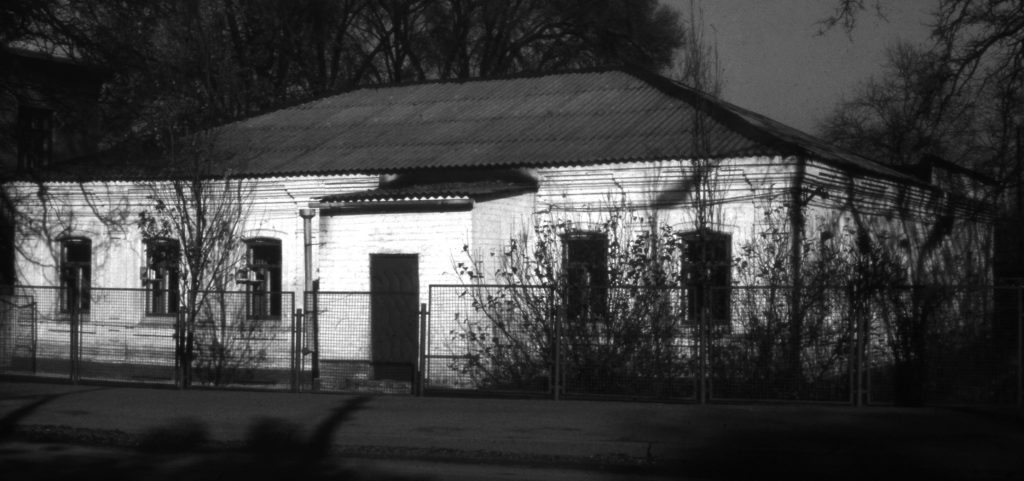
Robbery and Murder in Khortitsa
Report to the Ekaterinoslav Governor
On the night of August 6, 1906, in the village of Khortitsa (Chortitza, Khortytsia), Ekaterinoslav (Katerynoslav) District (uezd), a robbery was committed at the home of banker Herman Abramovich Niebuhr.1 Niebuhr himself was killed, his wife was wounded, and up to 600 rubles were stolen from the safe after it was broken into. The perpetrators fled after committing the crime and, following unsuccessful searches conducted by officials of the Ekaterinoslav District Police, the investigation into this case was ordered to be closed.
In December 1907, I instructed Police Inspector Kostiuchenko of the 2nd Precinct of Aleksandrovsk to conduct a thorough search for the unknown robbers who had attacked Niebuhr. Kostiuchenko undertook the search with the firm intention of solving the case.
Through energetic and thorough investigations, which continued without interruption until April of this year, Inspector Kostiuchenko established that the robbery at Niebuhr’s house was committed by known repeat offenders, Semen Sokolchenko and Vasili Poganets, with the participation of Niebuhr’s coachman, Peter Knysh. The latter enjoyed the full trust of his employers, earned through many years of honest service, and consequently knew when Niebuhr had money and where it was kept.
Information obtained during the investigation revealed that Sokolchenko and Poganets had already been tried several times for similar crimes and that they had previously carried out two unsuccessful attacks on the Niebuhrs, the first in early February and the second in June 1906.
The preliminary investigation conducted in this case by Police Inspector Kostiuchenko was forwarded to the Judicial Investigator of the 3rd Precinct of the Ekaterinoslav District on April 15 of this year under No. 1951. In reports dated June 27, July 10, and October 8 of this year under Nos. 1125, 1405, and 1574, [the Judicial Investigator] fully confirmed the facts set forth above and reported that the following individuals have been charged as defendants in this case: Semen Sokolchenko, Vasili Poganets, and Peter Knysh. They have been taken into custody and imprisoned.
I hereby report the above to Your Excellency, humbly requesting that you commend the skilful and energetic work of Police Inspector Kostiuchenko of the 2nd Precinct of Aleksandrovsk, demonstrated in the investigation of this significant crime.
District Inspector Vakulenko [signature]
The Flag Controversy
Report to the Ekaterinoslav Governor
(Top Secret.) August 26, 1910
On the evening of July 30 of this year, the local constable Shevchenko (from Khortitsa volost (county), the district entrusted to me) informed the owners of Khortitsa village commercial and industrial enterprises that they were required to put flags on the roofs of their buildings to commemorate the birthday of His Imperial Highness, the Heir to the Throne, Grand Duke Alexei Nikolaevich (July 30).2
It was discovered the next day that not only had they refused to comply, but that some local institutions, such as the volost administration, the post and telegraph office, and the boys’ and girls’ central schools, did not display the flags.
On the morning of July 30, a Khortitsa resident (a German), Andrei (Andreas) Andreevich Wallmann, the owner of a few factories, learned of the constable’s demands and invited Shevchenko to his office. Wallmann expressed his strong dissatisfaction with the requirement to display flags and threatened the man on duty with the following words: “If you keep decorating building with flags, I will pay seven kopeks for a postage stamp and you will be removed [from your position].”
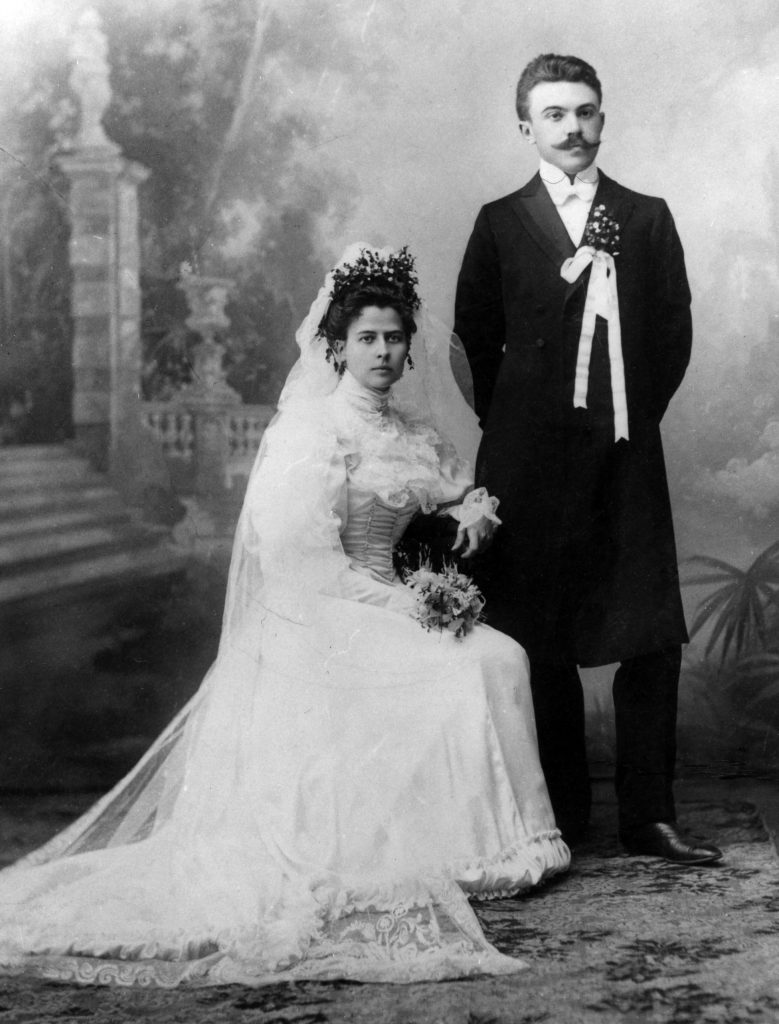
This matter, as the enclosed inquiries show, has been fully confirmed. As it appears from information that I personally gathered, A. A. Wallmann, who is a man of considerable wealth, enjoys great popularity among the German population living in the Khortitsa volost district (the area under my jurisdiction). He has established his authoritative influence over the entire German population. They ask for Wallmann’s opinion in all significant matters and fulfill state requirements only after his approval. Therefore, I attribute the unwillingness to display flags in the village of Khortitsa (by the volost administration, the post and telegraph office, the central schools, and the Hildebrand and Pries trading house) to an attempt to please Wallmann, since he himself also categorically refused to display flags. And when some Germans telephoned to ask him about it, he replied that there was no need to display flags and that he would discuss the matter with the constable himself.
Regarding this improper attitude shown by Wallmann and by the other persons of German origin under his influence toward the Imperial House currently reigning in prosperity over all Russia, I have the honour to report to Your Excellency for such action as you see fit, enclosing the inquiries conducted in this matter, and to state that the conduct of the German population described above, led by Wallmann, has a clearly demoralizing effect on the Russian population residing in Khortitsa, which consists chiefly of the working class.
District (uezd) Police Chief [signature]
Famine Relief in Zaporozhe
Statistical Report on the Activities of Foreign Relief Organizations in Zaporozhe Province
(August 1–15, 1922)
The American Relief Administration (ARA) operates in 502 towns and villages throughout the Zaporozhe province.3 It maintains 759 feeding kitchens, where 205,346 children receive regular daily meals [and food assistance]. [In addition] to these feeding kitchens, the ARA supplies food to 230 institutions, [including] orphanages, hospitals, infirmaries, nurseries, [and other welfare establishments]. These institutions accommodate11,724 children. Altogether, the ARA provides food assistance to 217,070 children and 179,340 adults residing in the Zaporozhe province.
The AMR (American Mennonite Relief) maintains 138 feeding stations [throughout the province]. [At these stations] 13,408 children and 8,298 adults receive regular meals, [bringing the total number] to 21,706 persons. [In addition, the organization supports] 8 institutions, where 108 children and 95 adults [are supplied with food], a total of 203 persons. The total number of feeding facilities reaches 146. Altogether, the organization provides food assistance to 13,516 children and 8,393 adults, for a total of 21,909 persons receiving meals.
The Nansen Mission operates 59 stations, feeding 15,966 children and 16,900 adults, for a total of 32,866 persons.
We have no information regarding shipments received from the ARA.
The following shipments from the Nansen Mission have arrived but have not yet been distributed: 70 poods of cocoa, 115 barrels of fish oil, 1,045 poods of condensed milk, and 600 poods of oatmeal.
AMR: Quantity of supplies received but not yet distributed: cocoa – 4,312.3 kg, sugar – 13,229.5 kg, condensed milk – 49,352.7 kg, wheat flour – 41,692.8 kg, beans – 879.1 kg, rice – 100,797 kg, fats – 10,075.3 kg, cornmeal – 4,974.6 kg, maize (corn) for adults – 49,297 kg. Total: 284,610.3.
Autobiography of Jakob Friesen
I was born on July 24, 1873, to a poor father and mother of German origin and Mennonite faith from the peasant settler village of Pavlovka (Osterwick), Khortitsa volost.4
My parents were farmers, and in their spare time worked as coachmen. We cultivated no more than six desiatiny of land. We had our own homestead, but no land of our own; the land was rented. There were six children in the family. I was the eldest son.
Until the age of twenty-one, I lived with my parents, helping them in their hard labour to earn a living. I received my education at the local primary school. As the eldest son, I was not drafted into the army.
In 1895, I left my parents’ home to find work. I worked for various employers and was engaged in agriculture until 1905. In 1906, I worked at Friesen’s factory and served as a coachman in the village of Kichkas for six years.
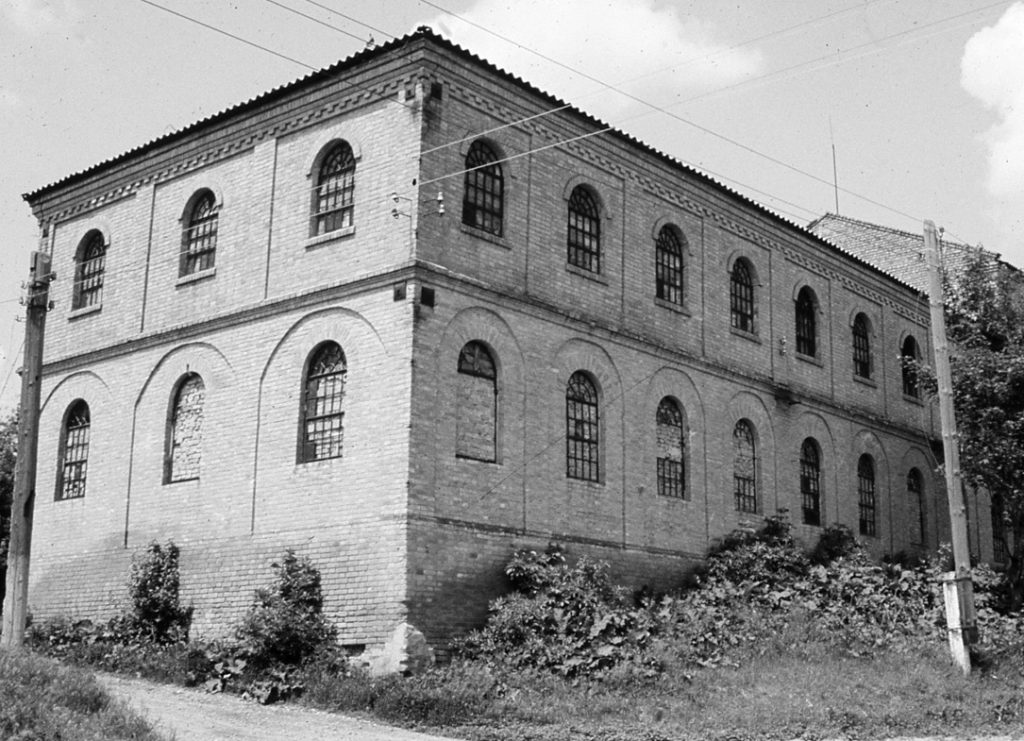
In 1912, I was hired at Rempel’s cement factory in the village of Pavlovka, where I worked as an unskilled labourer for three years. In 1915, I moved to Schultz’s factory in the village of Pavlovka, where I worked for two years.
In 1917, I took a position as a rural dispatcher (messenger) in the village of Pavlovka and worked there for three years. In October 1921, I was elected as chairman of the Committee of Poor Peasants in the village of Pavlovka, a position I still hold.
In 1900, I married the daughter of poor parents from the colony of Kichkas. My wife’s parents were coachmen. Currently, my family consists of twelve persons, including ten children, my wife, and me.
Having spent almost my entire life working for exploiters, earning a pittance for my labour, and burdened with a large family, I owe neither land nor any other property.
I have not been under trial or investigation.
December 26, 1922.
J. Friesen [signature]
Biography of Herman Neufeld
He was born on March 7, 1898. His parents came from a poor social estate.5
Due to his parents’ poverty, after completing the local school at the age of fourteen, Neufeld was forced to leave his parental home and to work for wealthier citizens. After working through the summer and saving some money, he enrolled in the central school with the goal of obtaining clerical work upon graduation, since his health did not allow him to perform heavy physical labour.
And indeed, in 1914, he took a position as a clerk in the Khortitsa volost administration. Having served there until the beginning of 1917, he was mobilized for military service. He served on a medical train in Moscow as part of the All-Russian Zemstvo Union.
Upon returning home in 1918, he again took a position in the Khortitsa volost council (soviet). During his time of service, he had to evacuate due to the advance of Denikin’s forces. After the restoration of Soviet power, he was elected secretary of the Dolinsk Revolutionary Committee and worked there until the arrival of the Austro-German army, after which he left Dolinsk for the territory of Tavrida province, Verkhne-Rohachyk volost.
Following the withdrawal of the German troops, he was elected by the population of Verkhne-Rohachyk volost to the Volost Committee of Poor Peasants. In 1921, he returned to Dolinsk and was soon elected a member of the village soviet and secretary of the Dolinsk Committee of Poor Peasants. After the death of the chairman of the Committee, he was elected to the vacated position, which he continues to hold to the present day.
From the day of the Committee’s establishment, Neufeld has worked honestly and conscientiously in this institution.
Dolinsk, December 25, 1922.
Compiled by a member of the Committee of Poor Peasants based on the account of Herman Neufeld.
Court Decision: Kornelii Unruh
In the name of the Ukrainian Soviet Socialist Republic:
On March 9, 1927, the Zaporizka (Zaporozhe) District Court for Civil Cases, composed of Presiding Judge Umanets, People’s Assessors Bondarenko and Chernyshov, with Secretary Semirenko and Prosecutor Chudnovets, examined the petition of Kornelii (Cornelius) Yakovlevich Unruh in open session.6 He is applying for exemption from regular military service on religious grounds as a Mennonite.
It was established that the petitioner, Kornelii Yakovlevich Unruh, born in 1897, was mobilized into the White Army in 1920 and served in Wrangel’s Army.7 After the capture of Crimea by the Red Army, he was taken prisoner and served as a medic in the Red Army, as evidenced by his military identification. He states that he did not bear arms in either the White Army or the Red Army. He submitted the petition because, following the military re-registration,8 he fears being assigned to the reserve army.
Having heard the petitioner’s explanations, the testimony of witnesses, and the conclusions of the expert and the prosecutor, the District Court ruled that, although the petitioner belongs by birth to a Mennonite family, in 1920 he volunteered for Wrangel’s Army and, most likely, served with arms in hand against Soviet power. The court further concluded that Wrangel did not conduct [forced] mobilizations in the village of Yakovlevo. On the basis of the Law on Compulsory Military Service of September 18, 1925, the petitioner Unruh is not entitled to exemption. Guided by Articles 118 and 226–230, the District Court resolved:
To deny the petition of Kornelii Yakovlevich Unruh, born in 1897, resident of the colony of Yakovlevo, Skelevate Village Council, Zaporozhe District and Region, on the grounds that he served in Wrangel’s White Army.
The decision may be appealed to the Supreme Court within one month from the date of its pronouncement.
Secretary [signature]
Court Decision: Heinrich Friesen
In the name of the Ukrainian Soviet Socialist Republic:
On March 9, 1927, the Zaporizka (Zaporozhe) District Court for Civil Cases, composed of Presiding Judge Umanets, People’s Assessors Bondarenko and Chernyshov, with Secretary Semirenko and Prosecutor Chudnovets, examined the petition of Heinrich Isaakovich Friesen in open session.9 He is applying for exemption from regular military service on religious grounds.
It was established that the petitioner, Heinrich Isaakovich Friesen, born in 1900, did not perform military service in the struggle against counter-revolution in Ukraine and was automatically transferred into the reserve army as a person registered for military service. Given the re-registration of reservists currently underway, and that the petitioner is by religious conviction a Mennonite and fears assignment to a combat unit, he submitted a petition for exemption from regular military service.
Having heard the petitioner’s explanations, the testimony of witnesses, and the conclusions of the expert and the prosecutor, the District Court determined that Friesen was born into a Mennonite family, was raised in the Mennonite faith, and remains a consistent adherent of its doctrine, which prohibits the bearing of arms, a principle recognized prior to 1917 and confirmed by the decree of January 25, 1921.
On the basis of the Law on Compulsory Military Service of September 18, 1925 (Articles 216–221), Heinrich Friesen’s petition is to be granted. Guided by Articles 118 and 226–230, the District Court resolved:
To exempt Heinrich Isaakovich Friesen, born in 1900, resident of Liubomirovka Village Council, Sofievskii District, Zaporozhe Region, from regular military service, which is to be replaced by non-combatant duties at the discretion of the military authorities, and to notify the Zaporozhe District Military Commissariat accordingly.
This decision may be appealed to the People’s Court within one month from the date of its pronouncement.
Secretary [signature]
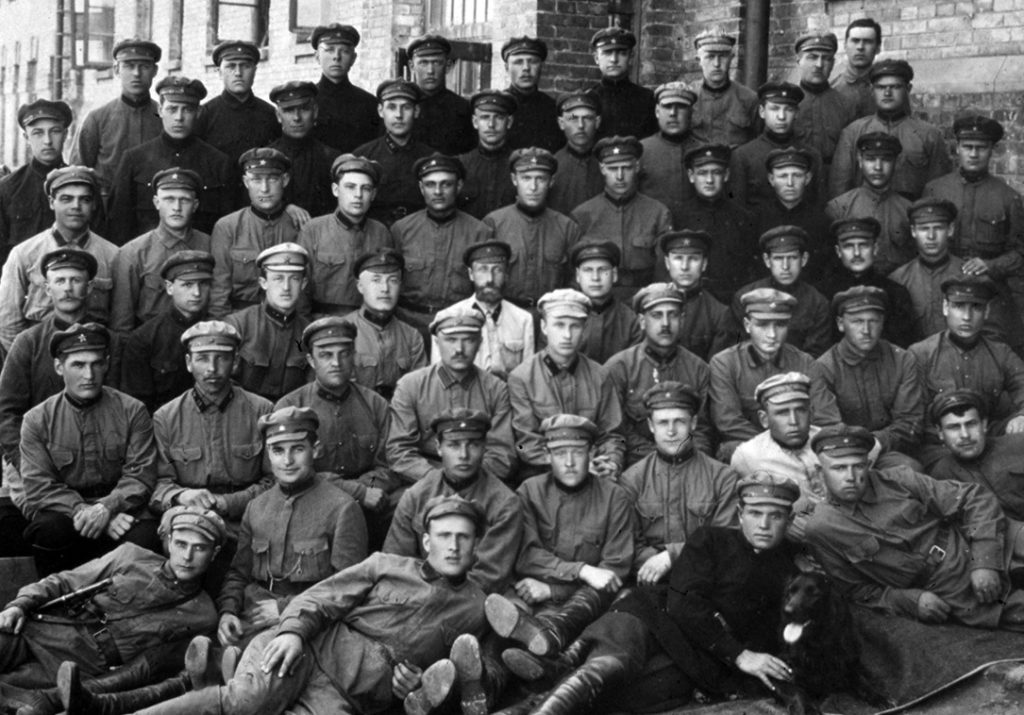
Emigration and Land Policy
To the Provincial Land Administrations: Donetsk, Ekaterinoslav, and Odessa
Ukrainian Soviet Social Republic
People’s Commissariat of Agriculture
4/08/1924
Copies: to the relevant Provincial Executive Committees
The VUTsIK (All-Ukrainian Central Executive Committee) commission, which carried out an inspection of the condition of the German-Mennonite colonies in Ekaterinoslav and Donetsk provinces, has established that one of the causes provoking discontent among the Germans/Mennonites – with all the consequences that flow from it (a desire to emigrate to America, etc.) – is the unregulated state of land relations and land use in the colonies.10
In order to resolve the situation that has arisen in the colonies, as well as to establish sustainable land use, which is an indispensable condition for normal economic activity, it is proposed that the following guidelines be adopted and strictly enforced:
1. Cease all expropriation of land in the colonies for the purpose of confiscating surplus land, even when such actions are carried out pursuant to resolutions of the Regional Land Commissions, since those resolutions reduce the land-use quotas previously established for German farms by the Provincial Executive Committees.
2. Draw up a supplementary land-management plan for the German colonies, so as to carry out, within this same year, the allocation of German and Mennonite landholdings in those colonies where allotments have not yet been made and were not included in the main plan for 1924.
3. When carrying out the land reform, land should be allocated according to the quotas for German farms established by the Provincial Executive Committees. At the same time, land reserves should be retained within the colonies so that colonists may expand their landholdings through leasing, in accordance with the resolution of the Collegium of the People’s Commissariat for Land Affairs of September 3, 1923, an extract of which is attached. In addition to these quotas, up to 20 per cent of the colony’s land area should be reserved for grazing, including the land which had been transferred to the state land fund and remains unoccupied and undistributed. Up to 1 per cent of the state land fund, based on the area occupied by the colonies, should be allocated for afforestation, primarily from land unsuitable for cultivation. If no such land is available, land suitable for agricultural use should be allocated instead.
4. As soon as possible, report the amount of land needed in your provinces for the resettlement of the German population from other regions and identify the most suitable locations for settlements. This may include land from colonies that has been transferred to the state land fund. The report must be submitted no later than August 15 of this year.
5. All further resettlement in the colonies must cease until land reform has been completed and special funds have been allocated for the resettlement of the German population. The allocation of new plots on lands formerly belonging to the colonies is also to be suspended, except for the lands which have been already assigned to Doukhobors and other colonists whose resettlement is scheduled for this year.
6. Given the seriousness and urgency of this work, the Provincial Land Administrations are instructed to take all necessary measures to implement it. The Provincial Executive Committees shall provide full assistance to the land authorities.
7. In addition to the above, it is hereby reported for your information and guidance that Mennonite preachers, although deprived of the right to vote, are not to be deprived of the right to use land.
Please report on the measures you have taken to the People’s Commissariat of Land no later than August 15 of this year (1924).
Resolution No. ___ of the Presidium of the All-Ukrainian Central Executive Committee (dated July 16 of this year) is enclosed for your information and guidance.
Signed:
Chairman of the All-Ukrainian Central Executive Committee: [G. I.] Petrovsky
Deputy of the People’s Commissar of Agriculture of the Ukrainian SSR: Vinnikov
Head of the Department of Land Management and Land Reclamation: Popov
Manager of the affairs of the People’s Commissariat for Agriculture: Lupin
Immigration Questionnaire
Berngart (Bernhard) Isaakovich Toews was born on December 17/4 [O.S./N.S.]11 in the village of Pavlovka (Osterwick), Khortitsa District, Zaporozhe (Zaporizhzhia) Region (okrug), Ukrainian Soviet Socialist Republic.12 He is German and has been a citizen of the Ukrainian SSR his entire life. He is married and works as an accountant.
From 1903 to 1913, he was employed at the mill of J. J. Thiessen in the city of Dnepropetrovsk (Dnipro); from 1913 to 1914, he worked in the city of Zaporozhe at the factory of J. I. Badovsky. During the European War, he served as a medical orderly at the Khortitsa Red Cross hospital.
After 1917, he served in the Khortitsa District Committee (raikom), the Dolinsk Executive Committee, and the Zaporozhe District Executive Committee. From September 20, 1923, to September 20, 1926, he worked at the Khortitsa Agricultural Cooperative of the Union of Citizens of Dutch Lineage. After September 20, 1926, he remained unemployed.
He is a member of the Trade Union of Soviet Commercial Employees (membership card no. 2821). He does not belong to any party. He has not been under trial or investigation.
His sister, Sarah Isaakovna Klassen, resides in the village of Pavlovka, Khortitsa District. His brother, Isaak Isaakovich Toews, a landowner near the city of Winnipeg (Canada, North America), departed on a foreign passport in 1925.
Toews resides in the village of Kantzerovka, Zaporozhe volost.
[Signature]
Height: medium.
Hair: fair.
Eyes: light grey.
Nose: ordinary.
No distinguishing marks.
April 1927.
An Application to Immigrate to the Ussr
Hamburg, February 1, 1925
To the Zaporozhe District Land Department
From: Citizen Ivan Huebert (February 2, 1871)
His wife, Anna Frantzevna (February 4, 1874)
His son, Gerhard Ivanovich (March 25, 1901)
His son, Franz Ivanovich (November 25, 1906)
His daughter, Katerina Ivanovna (February 17, 1911)
His son, Wilhelm Ivanovich (May 12, 1913)
His son, August Ivanovich (September 10, 1915)
All mentioned above were born in the Russian Empire, Ekaterinoslav Province.
At present, I reside with my family in the city of Hamburg and am a citizen of Germany, just as I was while living in Ekaterinoslav province.13 I lived in Russia until 1913, in the village of Khortitsa, Ekaterinoslav province. During the last five and a half years of my residence in Russia, I worked at the Tsarskaya Pristan (Tsar’s wharf) sawmill owned by Jacob Dyck.
I now wish to return to the aforementioned province – to the village of Khortitsa – in order to engage in farming and resume agricultural work on the land. I trust that neither the Land Department nor the residents of my village will object to my resettlement or impede my family’s re-establishment there.
In order for my family to be permitted to enter Russia, acquire Soviet citizenship, and settle on the land, the Consulate General of the Soviet Union in Hamburg requires me to submit the following documents: (1) A certificate issued by the Village Executive Committee confirming that there are no objections to my settlement in the village of Khortitsa and that the local community is willing to receive and accept my family as residents. (2) A certificate issued by the District Land Department confirming that, upon my arrival in the aforementioned village, I will be allotted a parcel of land for my family to cultivate.
I have already obtained the first certificate, as my brother, who is a Russian citizen and resides in Khortitsa volost, has sent me Certificate No. 1368, issued by the Village Council on August 7, 1924. I hope that the second certificate can be issued and sent to me by the District Land Department.
I therefore request that the District Land Department grant my petition and issue an official certificate confirming that I will be allotted a parcel of land upon my arrival in the Khortitsa District. My greatest wish is to resettle in my former homeland.
[Signature]
Enclosures:
1. Letter from the Consul General of the USSR in Hamburg.
2. Copy of the certificate issued by the Village Council, dated August 7, 1924, submitted in support of this petition.
Application Denied
March 24, 1925
To Mr. I. Huebert,
The Consulate General of the USSR in Hamburg hereby informs you that your petition requesting permission to relocate to the USSR has been denied at the present time.14
However, you may submit a new petition if you are able to provide a certificate issued by the District Land Department confirming that, upon your arrival, you will be granted a parcel of land for agricultural cultivation and the support of your family, or alternatively an official document confirming that you have been offered specific employment in the USSR. Upon receipt of such supporting documentation, your application may be reconsidered.
Secretary [signature]
Kanzerovka (Rosenthal) Village Council (Soviet) of Workers’, Peasants’, and Red Army Deputies
Nataliya Venger is a professor of history at Oles Honchar Dnipro National University, Ukraine, and a research associate at the University of Winnipeg. Aileen Friesen is an associate professor of history at the University of Winnipeg and the executive director of the Plett Foundation.
- Aleksandrov District Inspector to Ekaterinoslav Governor, State Archives of Dnipro Oblast (DADO), f. 11, op. 1, spr. 712, ark. 1–1ob. ↩︎
- DADO, f. 11, op. 1, spr. 1074, ark. 379–379ob. ↩︎
- State Archives of Zaporizhzhia Oblast (DAZO), f. r-28, op. 2, spr. 14, ark. 13–14. ↩︎
- DAZO, f. r-237, op. 1, spr. 8, ark. 118–118ob. ↩︎
- DAZO, f. r-237, op. 1, spr. 8, ark. 120–120ob. ↩︎
- DAZO, f. r-316, op. 3, spr. 220, ark. 2. ↩︎
- The White Army was the name given to the coalition of anti-Bolshevik forces that fought the Soviet Red Army during the Russian Civil War (1917–22). General Piotr Wrangel commanded the last major White Army force, until its defeat in November 1920. ↩︎
- A reference to the military enrolment required by the 1925 Law on Compulsory Military Service. ↩︎
- DAZO, f. r-316, op. 3, spr. 220, ark. 3. ↩︎
- DADO, f. r-1, op. 1, spr. 1930, ark. 2–2ob. ↩︎
- In 1918, the Bolsheviks replaced the Julian (Old Style) calendar of the Russian empire with the Gregorian (New Style) calendar. This policy change moved the calendar forward by thirteen days. ↩︎
- DAZO, f. r-316, op. 2, spr. 29, ark. 87ob. ↩︎
- DAZO, f. r-118, op. 1, spr. 60, ark. 350–51. ↩︎
- DAZO, f. r-118, op. 1, spr. 60, ark. 353. ↩︎